Login Form
Registration
Profile Informations
Login Datas
or login
How Many Units of Botox for Masseter?
A practitioner-focused guide to masseter dosing evidence, lower-face anatomy, patient assessment, and treatment safety.
- Also known as Masseter reduction, jawline slimming, jaw Botox
- Muscles involved Masseter
- Results appear 1-2 weeks
- FDA status Off-label
- Results last Several months
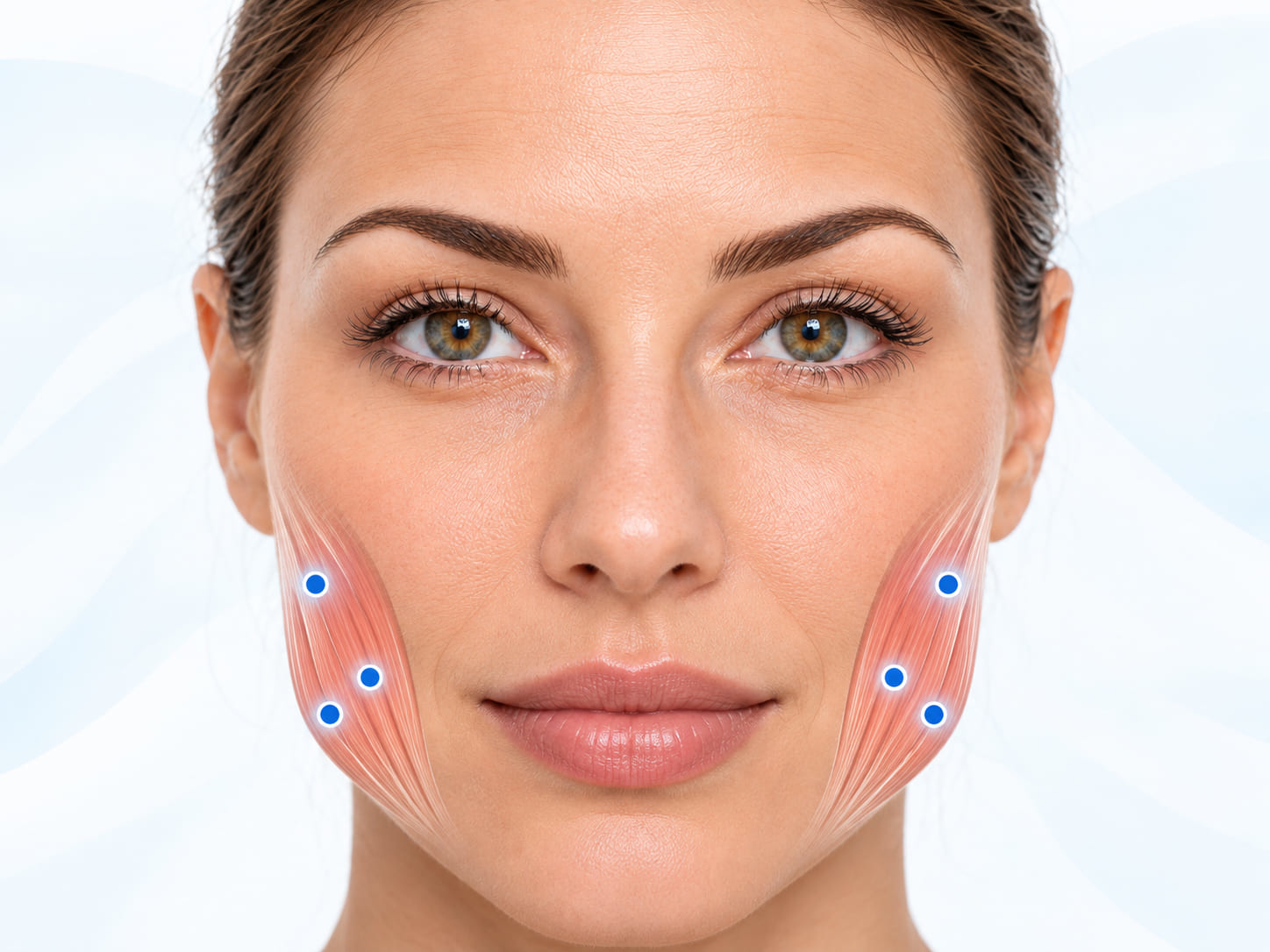
Masseter Botox treatments require careful evaluation of muscle size, jaw function, and lower-face anatomy. For aesthetic practitioners, selecting an appropriate dose means balancing muscle reduction with normal chewing function and facial proportions.
How Many Units of Botox Are Recommended for the Masseter?
In clinical practice, 20–40 units of onabotulinumtoxinA per masseter muscle is a commonly discussed range for masseter reduction. However, no universally accepted dose applies to every patient, and BOTOX Cosmetic does not currently have an FDA-approved masseter indication.
Published research has investigated a range of doses. A phase 2 trial evaluated 24, 48, 72, and 96 total units administered bilaterally, corresponding to 12, 24, 36, and 48 units per masseter. Subsequent phase 2b and phase 3 trials investigated 48- and 72-unit bilateral treatment regimens.
These findings provide clinical evidence for masseter reduction but should not be interpreted as universal prescribing recommendations.
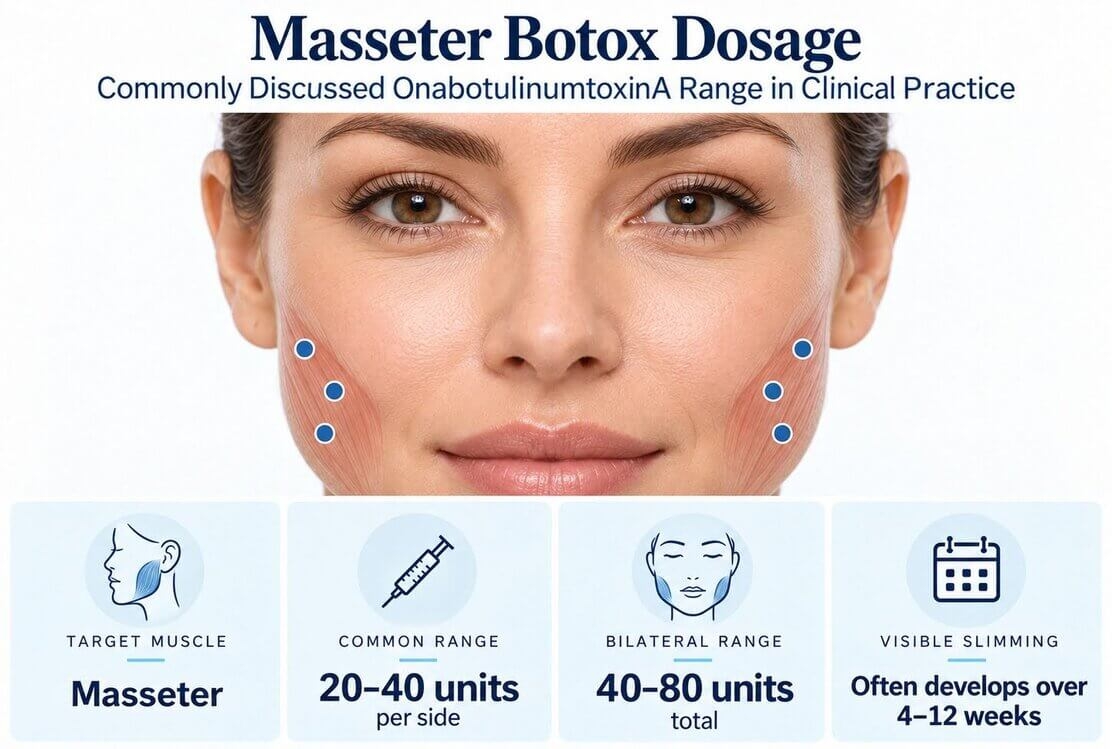
Masseter Botox Dosage at a Glance
| Clinical consideration | Information |
|---|---|
| Target muscle | Masseter |
| Commonly discussed range | 20–40 units per side |
| Bilateral range | 40–80 units |
| Phase 2 trial doses | 24, 48, 72 and 96 units total |
| Phase 3 trial regimen | 72 units total (36 per side) |
| FDA-approved masseter dose | None |
| Visible contour change | Often assessed at 8–12 weeks |
Professional aesthetic supplies
Explore professional botulinum toxin products
Compare formulations, specifications and product availability for your practice.
Masseter Hypertrophy and Treatment Planning
The masseter can contribute substantially to lower-face width, but muscular enlargement must be distinguished from skeletal contour, facial fat, and soft-tissue laxity. Visible jaw width alone is not a reliable indication of muscle thickness or dose requirement.
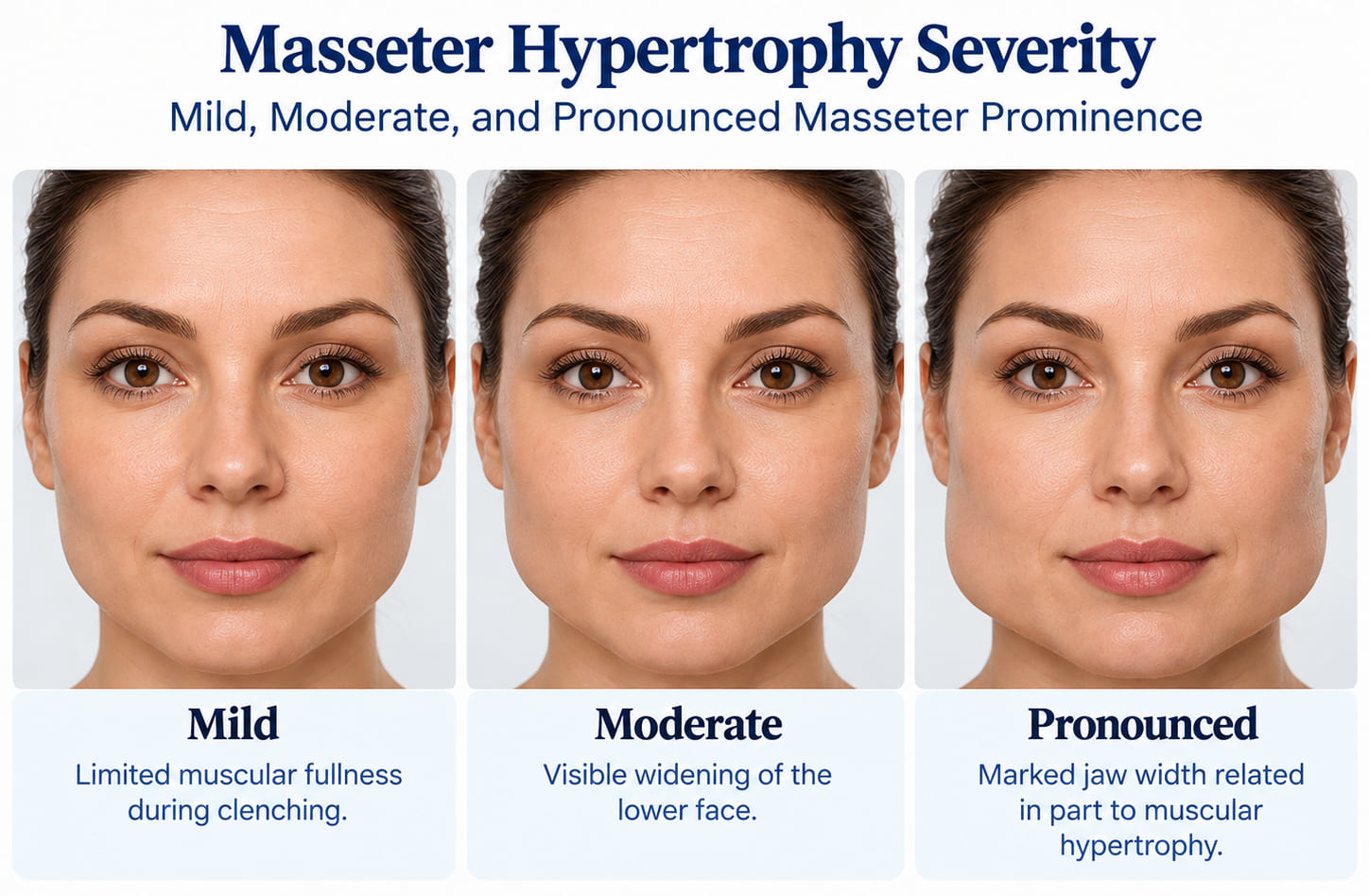
Mild Masseter Hypertrophy
Mild enlargement may be evident primarily during forceful clenching. Lower-dose approaches have been investigated, but no universally accepted regimen exists for mild muscle prominence.
Moderate Masseter Hypertrophy
Moderate enlargement is more readily palpable and may visibly broaden the jaw. Research has evaluated bilateral 48- and 72-unit treatment regimens, but individual anatomy and functional considerations remain decisive.
Pronounced Masseter Hypertrophy
Marked hypertrophy may create a square lower-face contour. Higher-dose regimens have been studied, but increased muscle size does not automatically justify escalating treatment.
What Factors Determine Masseter Botox Dosage?
Masseter dosing requires a more comprehensive functional assessment than selecting a unit count based on visible jaw width.
Practitioners should evaluate several anatomical and treatment-related factors.
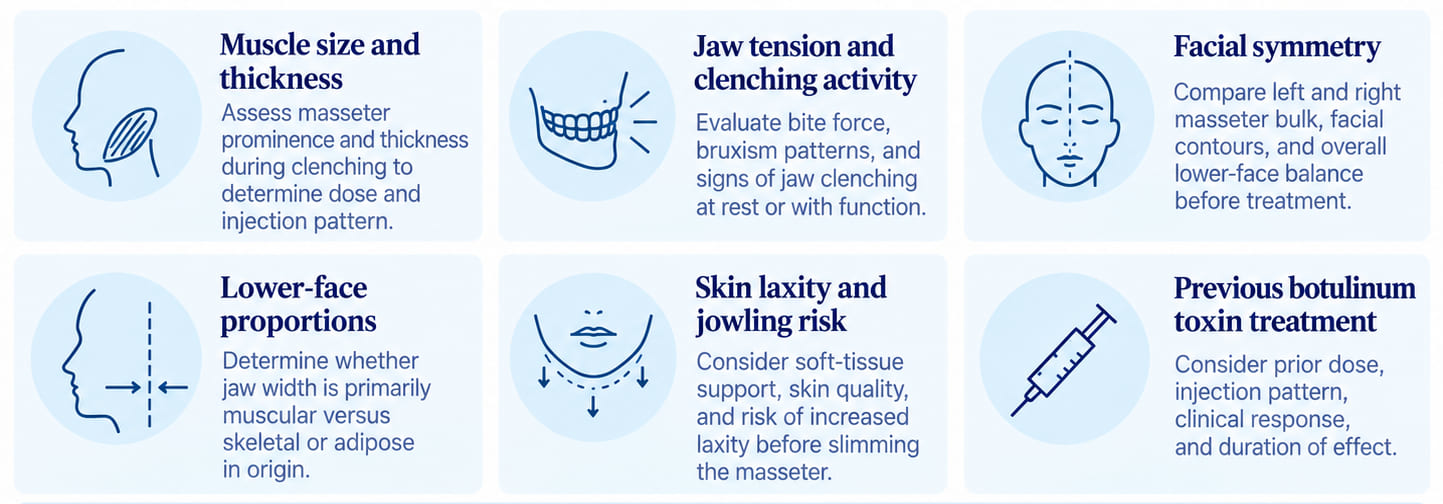
1. Masseter Muscle Size and Thickness
The masseter is a powerful chewing muscle extending between the zygomatic arch and the mandible. Its size and thickness vary considerably between individuals. Clinical palpation during jaw clenching can help identify the muscle's prominence and contribution to lower-face width.
Where available and clinically appropriate, ultrasound may provide additional information about muscle thickness, boundaries, and asymmetry. Larger muscle volume may influence treatment planning, but it does not establish an automatic requirement for higher dosing.
2. Masseter Muscle Strength and Activity
Patients with pronounced clenching activity may exhibit stronger masseter contractions and associated muscular enlargement. However, muscle strength is not always directly proportional to visible hypertrophy. Practitioners should evaluate the degree of muscle contraction alongside symptoms, chewing function, and clinical treatment objectives. The goal is controlled reduction of excessive muscle activity without compromising essential masticatory function.
3. Facial Anatomy and Jawline Proportions
Lower-face width depends on multiple structures, including the masseter muscles, mandibular bone, facial fat, and surrounding tissues. Botulinum toxin can reduce masseter muscle activity and potentially decrease muscle volume, but it cannot reduce mandibular bone width or remove facial fat.
4. Facial Symmetry
Masseter size and contraction strength may differ between the left and right sides.
Patients with asymmetrical muscle prominence require careful assessment to identify whether the difference is muscular, skeletal, dental, or related to another cause. Although individualized dosing may be considered, unequal units should not be administered solely because one side appears wider. Treatment decisions should be based on a documented anatomical and functional evaluation.
5. Treatment Objective
Masseter injections may be considered for different clinical objectives, including reduction of muscular prominence and selected cases of excessive jaw-muscle activity. These indications should not be treated as interchangeable.
Aesthetic masseter reduction focuses on changes in muscle volume and lower-face contour.
Treatment for jaw pain, bruxism, or temporomandibular disorders requires additional diagnostic assessment and may involve multidisciplinary management.
There is no single established Botox dosing protocol that applies to all these indications.
6. Previous Botulinum Toxin Treatments
Previous treatment records may help practitioners understand individual response. Relevant information includes the product administered, units per side, total dose, treatment timing, degree of muscle reduction, duration of results, and functional adverse effects.
A previously successful treatment can inform future clinical decisions, but it should not replace reassessment of muscle size and jaw function.
7. Skin Laxity and Lower-Face Volume
Reducing masseter volume can change the appearance of the jawline and surrounding soft tissues. Patients with reduced skin elasticity or existing lower-face laxity may develop more visible jowling or facial hollowing after substantial masseter reduction.
Practitioners should consider these factors when evaluating whether the expected aesthetic benefit outweighs potential changes to facial balance.
Is 20, 25, 30, 40 or 50 Units Enough for the Masseter?
20 units
per side
Twenty units of onabotulinumtoxinA per side, totaling 40 units bilaterally, is within a range described in published clinical practice.
The clinical response depends on muscle prominence, contraction characteristics, patient anatomy, and treatment objectives. For some patients, a lower degree of muscle relaxation may provide a noticeable effect. Others may experience a more limited change in masseter volume.
Practitioners should evaluate both functional and aesthetic outcomes rather than judging effectiveness solely by the total units administered.
25 units
per side
Twenty-five units per masseter corresponds to 50 units when administered bilaterally. This falls within commonly reported onabotulinumtoxinA dosing ranges for masseter reduction.
Its suitability depends on the patient's baseline muscle size, chewing function, treatment goals, and previous response to botulinum toxin.
30 units
per side
Thirty units per masseter, or 60 units total for bilateral treatment, is another dose encountered in masseter reduction literature and clinical practice. Research involving onabotulinumtoxinA has investigated both lower and higher bilateral doses. However, the appropriate treatment amount cannot be determined by muscle appearance alone.
Practitioners should assess masseter contraction patterns, lower-face anatomy, previous response, and the potential consequences of excessive muscle relaxation. A larger dose does not necessarily produce a proportionally greater aesthetic benefit.
40 units
per side
Forty units per masseter corresponds to 80 units administered bilaterally. Although this is above some commonly reported regimens, it falls within the broader dose range investigated in published research.
Increased dosing may contribute to more pronounced muscle weakening and potentially unwanted effects on chewing function or facial contour. Practitioners must evaluate the clinical justification and potential risks before considering a higher-dose approach.
50 units
per side
Fifty units per masseter would produce a combined bilateral dose of 100 units. This exceeds the highest bilateral dose of 96 units evaluated.
Higher-dose treatment requires particularly careful assessment of muscle anatomy, functional consequences, and available clinical evidence. Practitioners should avoid assuming that patients with particularly strong masseter muscles will benefit from progressively increasing doses.
How Many Botox Units Are Needed for Jawline Slimming?
Masseter Botox for jawline slimming aims to reduce excessive muscle prominence and create a narrower lower-face contour. In patients whose jaw width is primarily caused by masseter hypertrophy, decreasing muscle activity can lead to gradual muscle-volume reduction.
Patients with broad mandibular bone structure or substantial lower-face fat may not achieve the desired change through neuromodulation alone. Practitioners should confirm that masseter hypertrophy contributes meaningfully to the patient's facial width before treatment.
Are Masseter Botox Units Different for Bruxism and Jaw Tension?
The objective in bruxism or temporomandibular pain assessment may be reduced muscle overactivity rather than cosmetic slimming. These are distinct clinical indications and cannot share an automatic dosing rule. Appropriate dental and orofacial pain evaluation is important; Botox is not an established cure for TMJ disorders.
Where Is Botox Injected in the Masseter?
Masseter Botox targets the masseter muscle, a major muscle of mastication located along the lateral aspect of the mandible. The muscle originates from the zygomatic arch and inserts along the mandibular ramus and angle. Its superficial and deep components contribute to jaw elevation and chewing force.
Masseter Muscle Anatomy
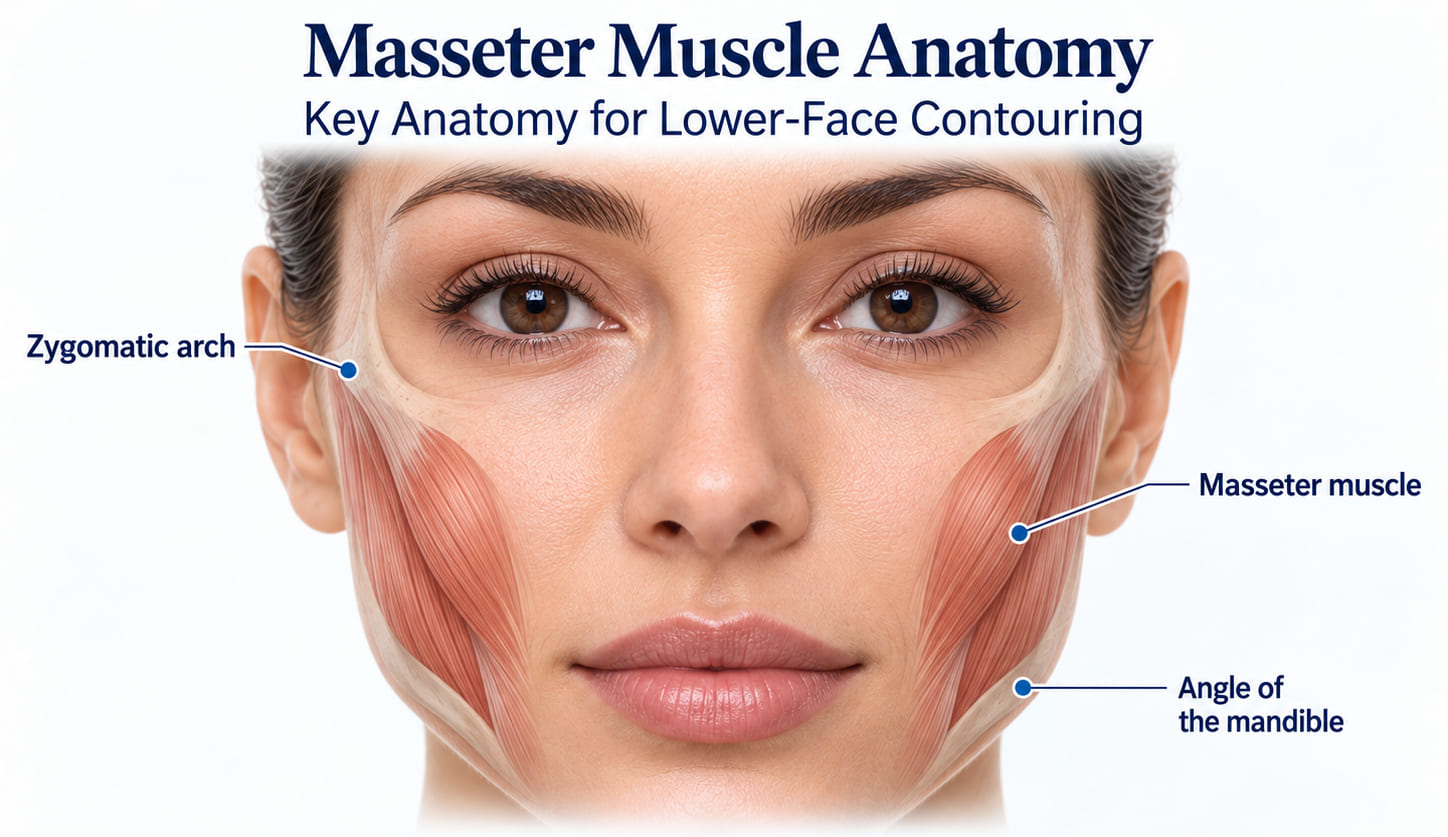
The masseter is closely associated with structures that require careful identification during treatment planning. These include the parotid gland and duct, facial vessels, and neighboring muscles involved in facial expression. The muscle's thickness and anatomical boundaries vary between individuals.
Practitioners should understand these relationships before planning treatment to reduce the risk of unintended toxin effects outside the intended muscle.
Masseter Injection Site Considerations
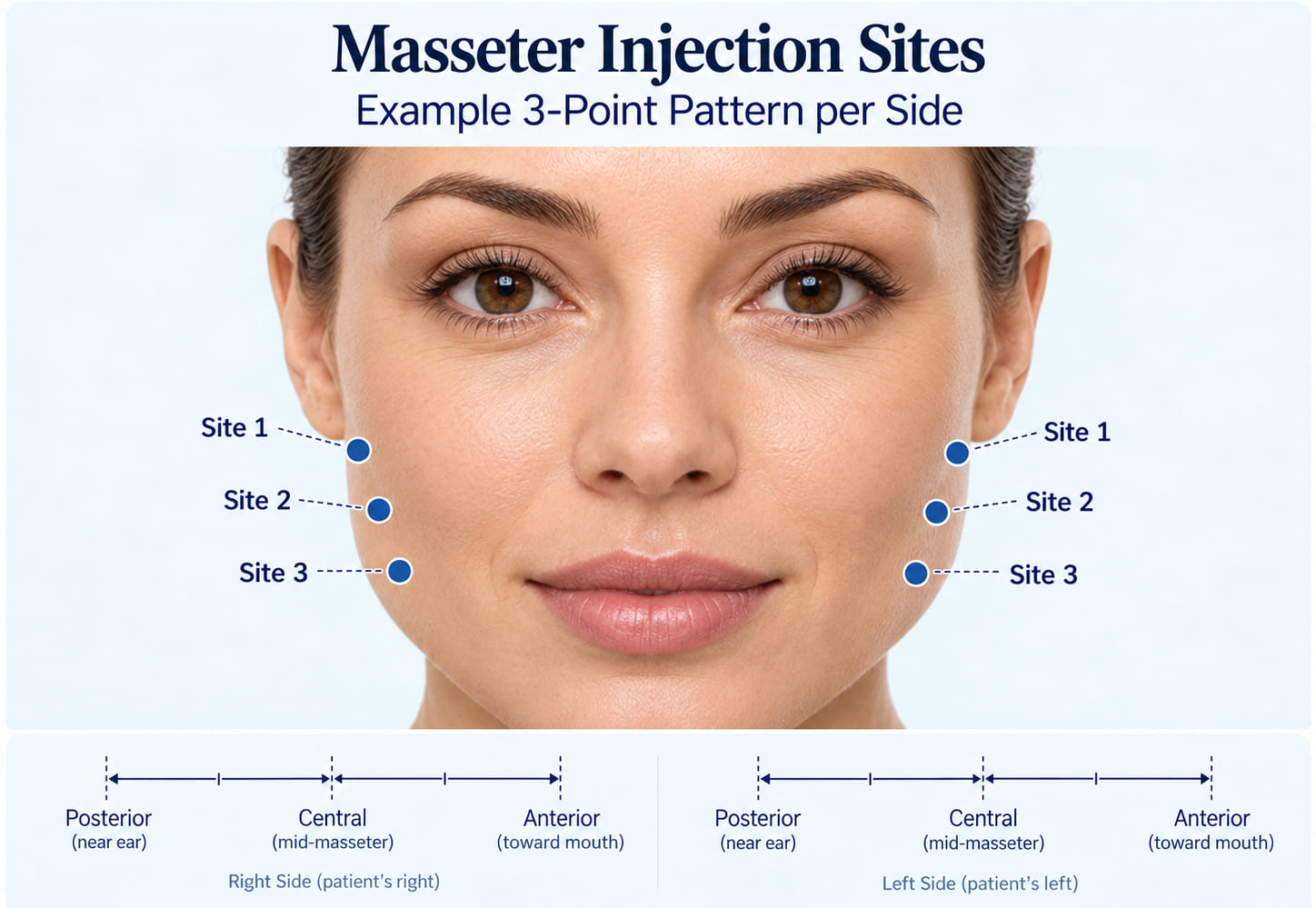
Published onabotulinumtoxinA trials have employed multiple injection sites within each masseter muscle.
However, these research protocols do not establish a universal injection pattern for every patient or product.
Assessment should consider:
- Muscle boundaries: Identify the masseter and distinguish it from neighboring structures.
- Muscle prominence: Evaluate the location and extent of muscle enlargement during clenching.
- Muscle thickness: Consider anatomical variation and whether imaging would improve assessment.
- Facial symmetry: Document differences in muscle size and contraction strength.
- Surrounding anatomy: Account for nearby facial muscles, parotid structures, and neurovascular anatomy.
- Functional status: Assess baseline chewing strength, discomfort, and jaw movement.
How Long Does Masseter Botox Take to Work?
Masseter Botox effects develop in stages.
Reduced muscular activity may become noticeable within the first one to two weeks following treatment. However, visible changes in lower-face contour generally require more time because muscle-volume reduction occurs gradually. Patients undergoing aesthetic treatment may begin noticing jawline changes within several weeks, with more pronounced results commonly assessed around eight to twelve weeks. Practitioners should explain that changes in muscle activity and visible jaw slimming do not necessarily occur at the same time.
Masseter Botox results can remain visible for several months, although the duration varies according to the product, administered dose, individual muscle characteristics, and treatment history. The functional effect of botulinum toxin gradually diminishes as neuromuscular signaling recovers. Visible contour changes may persist beyond the initial period of reduced contraction because muscle volume takes time to recover. Retreatment should follow appropriate clinical reassessment rather than an automatic schedule. Practitioners should evaluate muscle recovery, chewing function, facial symmetry, and the patient's response before considering additional treatment.
What Happens If Too Much Botox Is Injected Into the Masseter?
Excessive masseter weakening or unintended effects on surrounding structures can produce both functional and aesthetic complications.
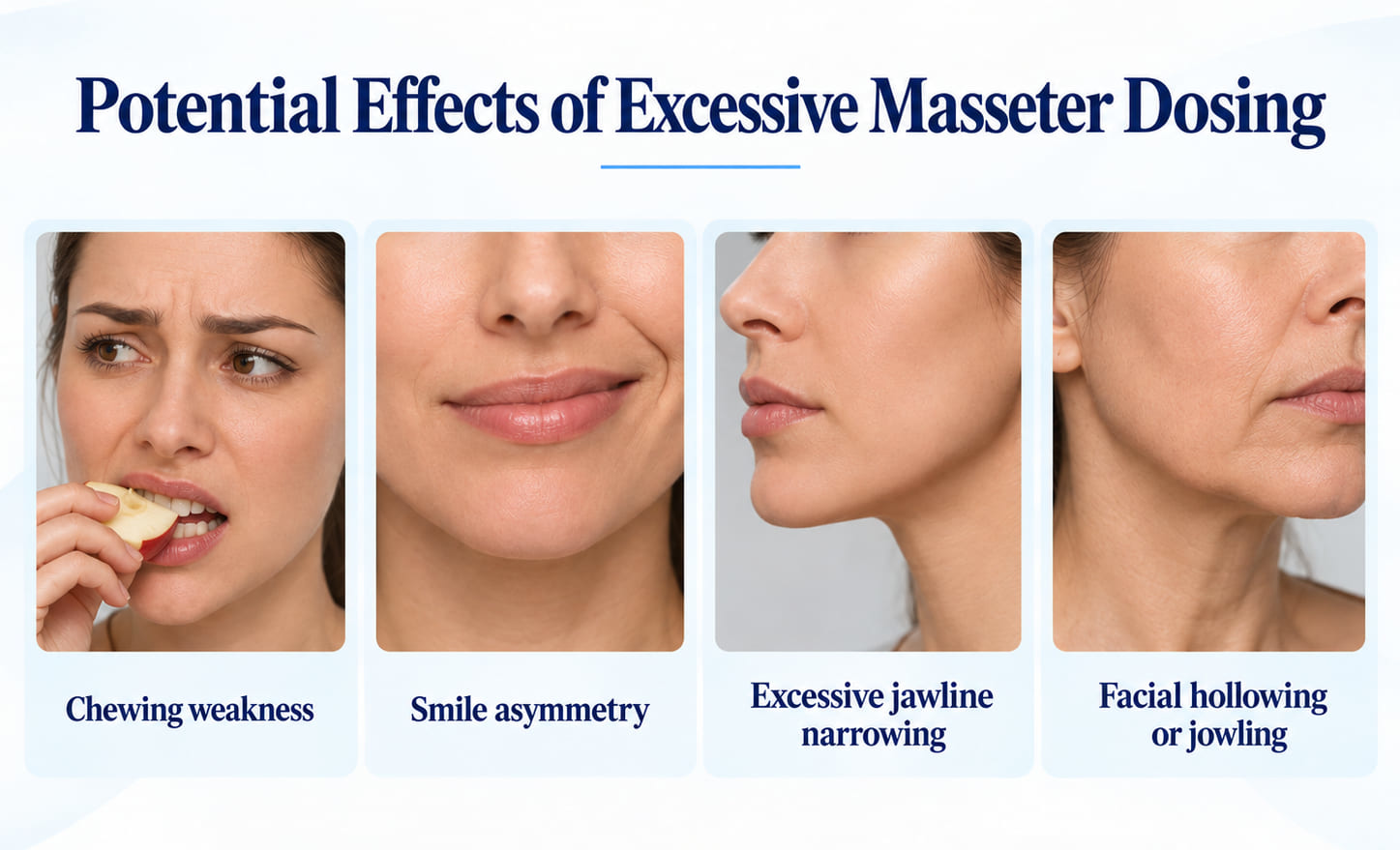
Potential adverse effects include:
- Chewing weakness: Reduced muscle force may cause difficulty chewing tougher foods or increased fatigue during meals.
- Smile asymmetry: Unintended weakening of neighboring facial-expression muscles may affect smile balance.
- Excessive jawline narrowing: Substantial reduction in masseter volume may create an undesirable lower-face contour.
- Facial hollowing or jowling: Loss of muscle volume can reveal existing soft-tissue laxity or alter lower-face proportions.
- Asymmetrical muscle reduction: Differences in response may produce uneven facial contour.
- Localized discomfort: Injection-site bruising, swelling, tenderness, or temporary pain may occur.
Potential changes in mandibular bone morphology with repeated or prolonged masseter weakening have also been investigated. Long-term clinical implications remain an important area of research.
The likelihood of complications depends on more than dose alone. Injection distribution, anatomical accuracy, treatment history, and individual muscle function also influence risk.
Are Masseter Botox Units the Same Across Different Brands?
No. Botulinum toxin units are specific to each formulation and should not be directly converted between products. BOTOX Cosmetic contains onabotulinumtoxinA, whereas Dysport contains abobotulinumtoxinA. The products differ in their potency assays, formulation characteristics, and clinical evidence.
Practitioner guide
Not all botulinum toxin units are equivalent.
Review formulation differences and product-specific dosing considerations before selecting a neuromodulator for your clinic.
Choosing the Right Botulinum Toxin for Masseter Treatments
Appropriate product selection is an essential part of masseter treatment planning.
Practitioners should consider the formulation's potency units, clinical evidence, preparation requirements, safety profile, and regulatory status.
Explore Botox Units by Treatment Area
Hover over an area to see its typical units, then click to open the full guide.
Tap an area on the face or in the list to see its typical units, then tap “View guide”.

- Forehead 20 units
-
Masseter 20–40 units
Choosing a Botulinum Toxin Product for Your Practice
Product selection should account for approved indications, clinician familiarity, labeling, availability, storage and preparation requirements. Treatment choice must remain grounded in professional authorization and product-specific evidence.
Activa Derma · For healthcare professionals
Professional botulinum toxin products, in one place
Explore available brands, product specifications and aesthetic supplies for your practice.
Frequently Asked Questions About Masseter Botox Units
Published clinical practice frequently discusses approximately 20–40 units of onabotulinumtoxinA per masseter, although dosing varies. There is no FDA-approved masseter dose, and treatment should be individualized according to clinical findings and the available evidence.
Clinical studies have evaluated a range of bilateral doses. A phase 3 onabotulinumtoxinA trial used 36 units per side, totaling 72 units, in patients with marked or very marked masseter prominence. This is a research regimen, not a universal prescribing recommendation.
There is no universal first-time dose. Practitioners should assess muscle prominence, chewing function, facial symmetry, treatment objectives, and relevant medical history.
Some published trials have used three injection sites per masseter. However, injection patterns are protocol-specific and should not be generalized to every patient or botulinum toxin product.
Masseter size is an important consideration, but dosage cannot be determined from muscle thickness alone. Contraction strength, anatomical boundaries, facial proportions, treatment history, and functional requirements also influence clinical decisions.
Visible masseter reduction develops gradually over several weeks. More substantial changes are often evaluated around eight to twelve weeks, with clinical trials frequently assessing outcomes at day 90.
Visible masseter reduction may persist for several months. Some controlled studies have documented improvements through six months, although individual outcomes and retreatment requirements vary.