6 Types of Botox: Brands, Differences & Uses
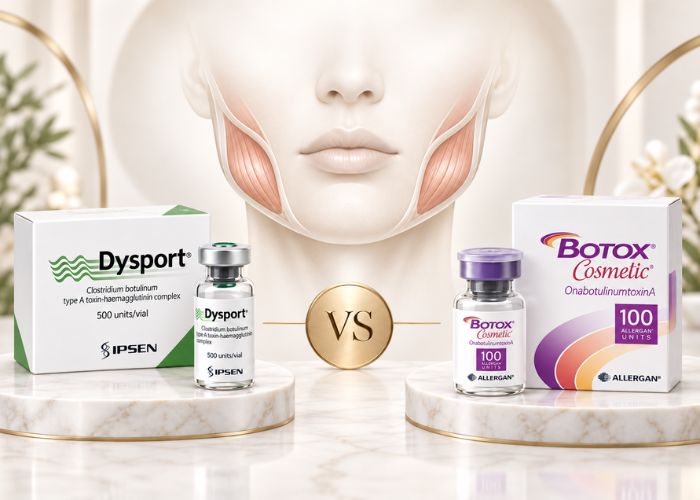
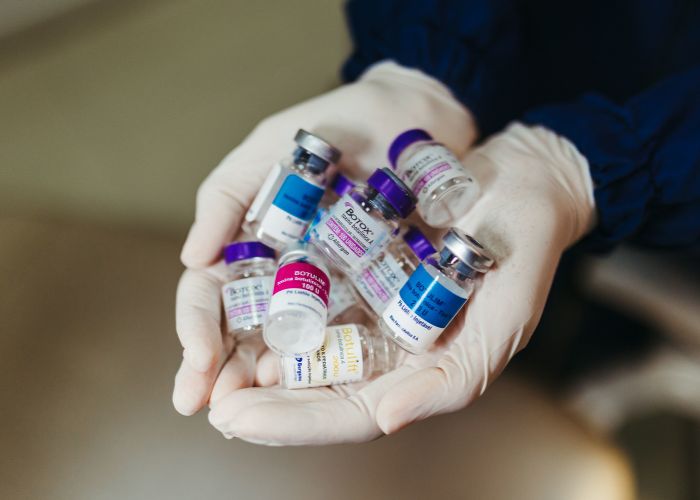
Botox is one brand, not the name of every wrinkle-relaxing injection. Still, many patients use “Botox” for the whole botulinum toxin category.
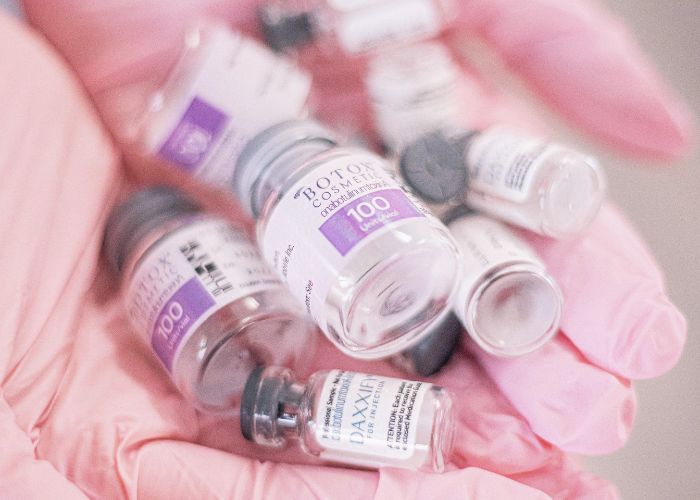
The six leading U.S. options all use botulinum toxin type A, but their labels, formulas, units, and duration evidence differ in ways that matter in practice.
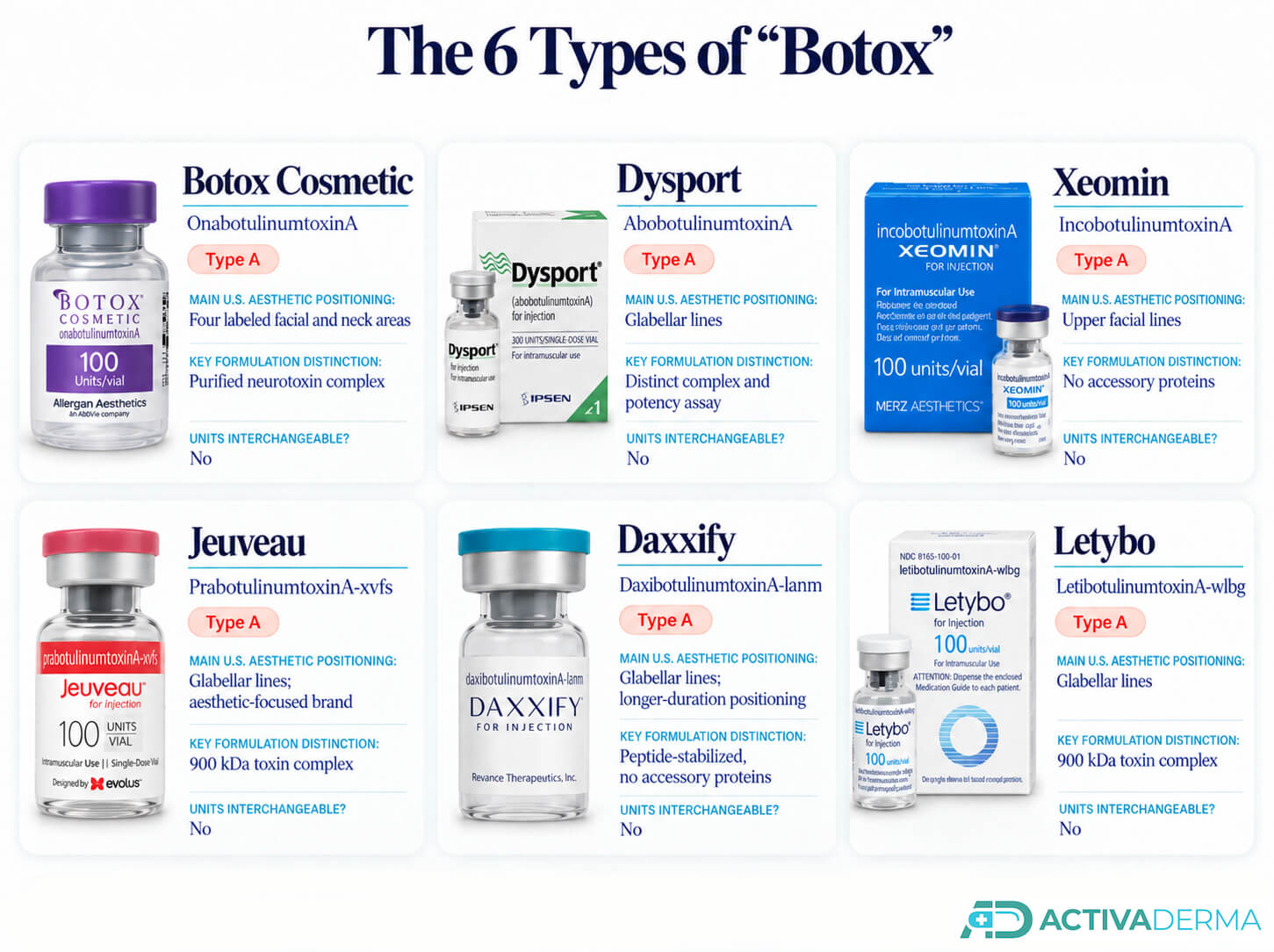
The 6 Types of “Botox” at a Glance
Each product temporarily reduces nerve signaling to selected muscles. That shared action does not make the neurotoxins interchangeable, though.
Here is the clearest way to compare the six types of Botox patients may ask about.
|
Product |
Active ingredient |
Toxin type |
Main U.S. aesthetic positioning |
Key formulation distinction |
Units interchangeable? |
|
Botox Cosmetic |
OnabotulinumtoxinA |
Type A |
Four labeled facial and neck areas |
Purified neurotoxin complex |
No |
|
Dysport |
AbobotulinumtoxinA |
Type A |
Glabellar lines |
Distinct complex and potency assay |
No |
|
Xeomin |
IncobotulinumtoxinA |
Type A |
Upper facial lines |
No accessory proteins |
No |
|
Jeuveau |
PrabotulinumtoxinA-xvfs |
Type A |
Glabellar lines; aesthetic-focused brand |
900 kDa toxin complex |
No |
|
Daxxify |
DaxibotulinumtoxinA-lanm |
Type A |
Glabellar lines; longer-duration positioning |
Peptide-stabilized, no accessory proteins |
No |
|
Letybo |
LetibotulinumtoxinA-wlbg |
Type A |
Glabellar lines |
900 kDa toxin complex |
No |
The 6 Types of Botulinum Toxin Used in Aesthetics
Several botulinum toxin types occur in nature, but these six products all use type A derived from the bacterium Clostridium botulinum. Each contains a purified botulinum neurotoxin in its own formulation. In other words, the products belong to the same category, but only one is Botox.
1. Botox Cosmetic: OnabotulinumtoxinA
Botox Cosmetic contains onabotulinumtoxinA, a botulinum toxin type A with decades of clinical use.
It blocks acetylcholine release, which temporarily reduces contraction in the injected muscles.
Its U.S. aesthetic label covers glabellar lines, forehead lines, crow’s feet, and platysma bands. That broad evidence and familiar treatment history make Botox a common starting point, but its units cannot be converted into the units of another neurotoxin.
2. Dysport: AbobotulinumtoxinA
Dysport does the same basic job as Botox, but it is not the same formulation. Its active ingredient is abobotulinumtoxinA, and its U.S. cosmetic approval covers glabellar lines in adults younger than 65.
Dysport temporarily weakens the muscles that form these frown lines. Its dose numbers are higher because Dysport uses its own potency assay, not because the toxin is weaker.
3. Xeomin: IncobotulinumtoxinA
What sets Xeomin apart is its 150 kDa incobotulinumtoxinA without accessory proteins. Once injected, it still blocks the nerve signal that tells a targeted muscle to contract.
Its current U.S. aesthetic label covers glabellar lines, horizontal forehead lines, and crow’s feet. The shorter ingredient profile is a real formulation difference, but it does not prove that Xeomin is safer, “cleaner,” or better for every patient.
4. Jeuveau: PrabotulinumtoxinA-xvfs
Jeuveau was developed specifically for aesthetic treatment. Its type A neurotoxin, prabotulinumtoxinA-xvfs, reduces muscle movement in the glabella and softens the vertical lines between the eyebrows.
In two pivotal trials, 67% and 71% of patients met the combined Day 30 success measure, compared with 1% in each placebo group. Its beauty-focused position may attract patients, but dosing still depends on facial anatomy and product-specific training.
5. Daxxify: DaxibotulinumtoxinA-lanm
Daxxify has the clearest longer-lasting results of the six neurotoxins for glabellar lines. Its active ingredient, daxibotulinumtoxinA-lanm, relaxes the muscles that create frown lines. A special peptide keeps the formulation stable without human serum albumin.
In phase 3 studies, the median effect lasted about 24 weeks. This may mean fewer treatments each year, although some patients may prefer a shorter-lasting toxin for their first injections.
6. Letybo: LetibotulinumtoxinA-wlbg
Letybo gives providers another botulinum toxin type A option for moderate to severe glabellar lines. Its active ingredient, letibotulinumtoxinA-wlbg, comes as a 900 kDa complex that temporarily reduces the muscle activity behind frown lines.
The U.S. label includes 50 and 100 Unit vials. Since Letybo received FDA approval more recently than the other neurotoxins here, careful outcome records can help clinics build reliable dosing and retreatment plans.
How Do the 6 Types of Botox Actually Differ?
The active ingredients differ in toxin preparation, manufacturing, potency testing, accessory proteins, and stabilizers. Their cosmetic applications overlap, but these details do not create a simple best-to-worst ranking. FDA approval belongs to one exact product and treatment area. It does not carry across the whole class.
All six interrupt a nervous system signal by blocking acetylcholine release at the nerve ending. They do this by cleaving a protein called SNAP-25, so the targeted muscle contracts less. An initial effect may appear within days, while the balanced result is judged later. Onset and duration vary with the product, dose, anatomy, indication, study design, and patient. Most importantly, botulinum toxin units cannot be directly compared or converted between brands.
Which Type of Botox Works Fastest?
No single neurotoxin has been proven fastest across every treatment area. Dysport has shown relatively early action compared with Botox around the eyes.
In a 90-person split-face study, both products worked by Day 2, while Dysport produced greater improvement on Days 4 and 6.
Daxxify phase 3 data also show an onset as early as Day 1, with a median of two days for glabellar lines.
Overall, onset varies by product, dose, patient, and treatment area. Providers should still wait about 14 days before judging the settled result.
Which Type of Botox Lasts the Longest?
Daxxify has the strongest longer-duration evidence for glabellar lines. In the SAKURA phase 3 program, the median none-or-mild response lasted about 24 weeks, with return to baseline near 26 to 28 weeks.
Most other botulinum toxin treatments follow three-to-four-month cycles. Median duration, patient-perceived effect, responder rate, and safe time to retreatment are not the same measure.
Which Type of Botox Is Best for Different Treatment Areas?
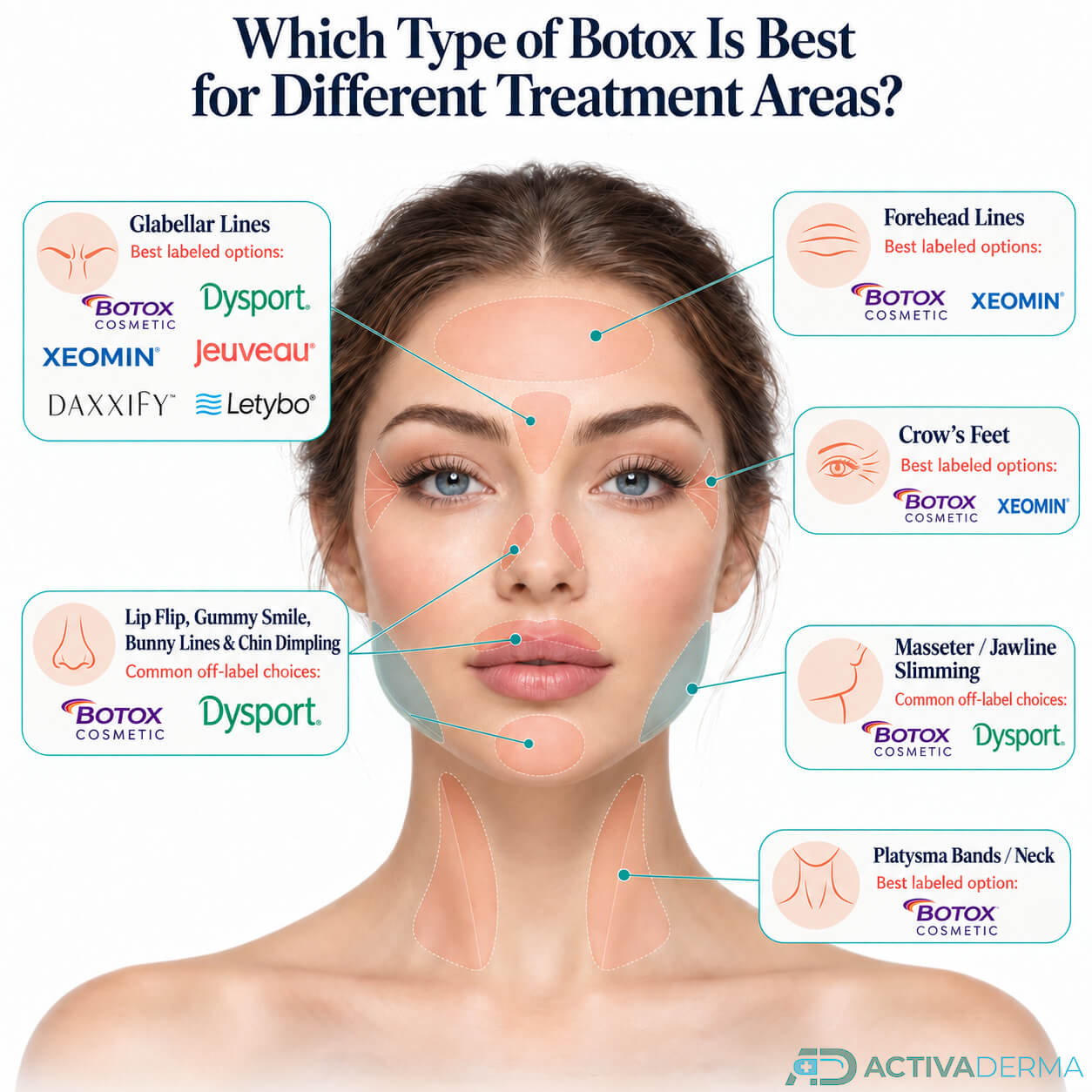
Start with the label, not a brand reputation. Botulinum toxin injections must be planned around facial anatomy, muscle strength, and the treatment goal. One product's success in frown lines does not prove equal performance at every injection site.
Glabellar Lines
All six neurotoxins have FDA approval for moderate to severe glabellar lines. Botox offers the broadest history, while Daxxify makes sense when a longer median result is a priority, and the patient accepts a longer commitment.
Forehead Lines
Botox and Xeomin have current U.S. approvals for horizontal forehead lines. Both require careful balance with the glabella to soften facial wrinkles without dropping the brow or creating an uneven upper face.
Crow's Feet
Botox and Xeomin are the labeled choices for lateral canthal lines. Dose and placement should follow smile pattern, skin quality, and nearby anatomy rather than extending a forehead plan into this thinner treatment area.
Platysma Bands and Neck
Botox is the only one of these six with a specific U.S. aesthetic indication for platysma bands. Neck injections demand conservative planning because excessive weakening can affect swallowing or lower-face movement.
Masseter and Jawline Slimming
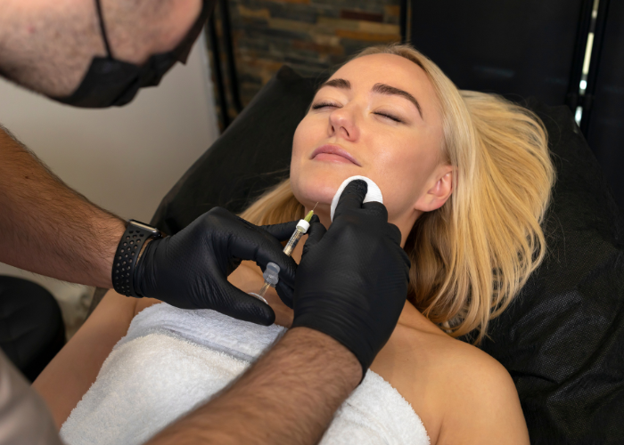
Botox and Dysport are the two products providers commonly use for masseter reduction and jawline slimming.
Neither has FDA approval for this area yet, so treatment remains off-label. However, in August 2026, the FDA accepted a supplemental application for Botox Cosmetic for masseter muscle prominence, but acceptance for review does not change its current off-label status.
ALSO READ: Dysport vs Botox for Masseter: 8 Factors to Compare
Lip Flip, Gummy Smile, Bunny Lines and Chin Dimpling
Botox and Dysport are also common choices for these smaller treatment areas because many providers already know how they behave at low doses.
None of the six has FDA approval for these specific uses, so they remain off-label. The best results come from matching the dose and placement to the patient’s facial anatomy and natural smile.
How Should Practitioners Choose Between Botox Types?
Choosing among different types starts with the best fit for the exact patient, indication, and practice workflow. A persuasive brand story cannot replace product-specific evidence or facial anatomy.
- Start with the current Food and Drug Administration label, including contraindications, dose limits, storage, and reconstitution.
- Review earlier Botox treatments or other neurotoxin injections: product, dose, dilution, injection sites, onset, lasting results, side effects, and time to retreatment.
- Never reuse a Botox conversion for Dysport or another botulinum toxin type. Record what you inject, including the exact form and units administered.
- For larger treatment areas or larger treatments, calculate total dose, vial use, consumables, and waste before comparing acquisition cost.
- Set expectations around the clinical goal. A botulinum toxin treatment reduces selected muscle activity; it does not improve every wrinkle, replace lost volume, or substitute for cosmetic surgery.
- Keep clear drug administration records and teach patients when urgent symptoms, such as trouble swallowing or breathing, require immediate care.
Which Type of Botox Should You Choose?
The right choice depends on the patient and the treatment plan. Start with the approved treatment area, then compare onset, duration, previous response, and your experience with each formulation. A familiar brand is not always the better option, and a lower unit price means little when toxin units are not interchangeable.
At Activa Derma, we bring leading professional brands together in one convenient botulinum toxin range. Compare the available options and build your inventory around your technique, treatment menu, and the results your patients request most.
FAQ
Which type of Botox is best?
The best option is the product your provider can match to the approved area, facial anatomy, treatment history, and desired duration. No brand leads in every situation.
What type of Botox lasts the longest?
Daxxify has the longest median glabellar-line evidence among these six, with none-or-mild results lasting about 24 weeks in phase 3 studies.
Which brand of Botox is considered the best?
Botox Cosmetic is the most established name, but “best” depends on the indication. Dysport, Xeomin, Jeuveau, Daxxify, and Letybo are separate botulinum neurotoxins, not lesser forms of Botox.
What is the cleanest Botox brand?
There is no medical “cleanest” ranking. Xeomin lacks accessory proteins, but that formulation detail does not automatically make it safer, purer, or more effective for a patient.
What is the cheapest Botox brand?
No brand is always cheapest. Unit prices cannot be compared across toxins, so practices should calculate the full treatment cost, dose, vial waste, maintenance interval, and expected result.
Which Botox brands are FDA approved?
Botox Cosmetic, Dysport, Xeomin, Jeuveau, Daxxify, and Letybo each have at least one U.S. aesthetic approval. Their approved treatment areas are different and are not transferable between brands.
What are the top 3 brands of Botox?
Botox Cosmetic, Dysport, and Xeomin are the three most established names in U.S. aesthetics. Daxxify, Jeuveau, and Letybo are also FDA-approved options with distinct evidence and practice considerations.