
A patient asks for smoother skin. Do they mean fewer lines when they smile, less roughness across their cheeks, or shallower acne scars? Those goals call for different treatments.
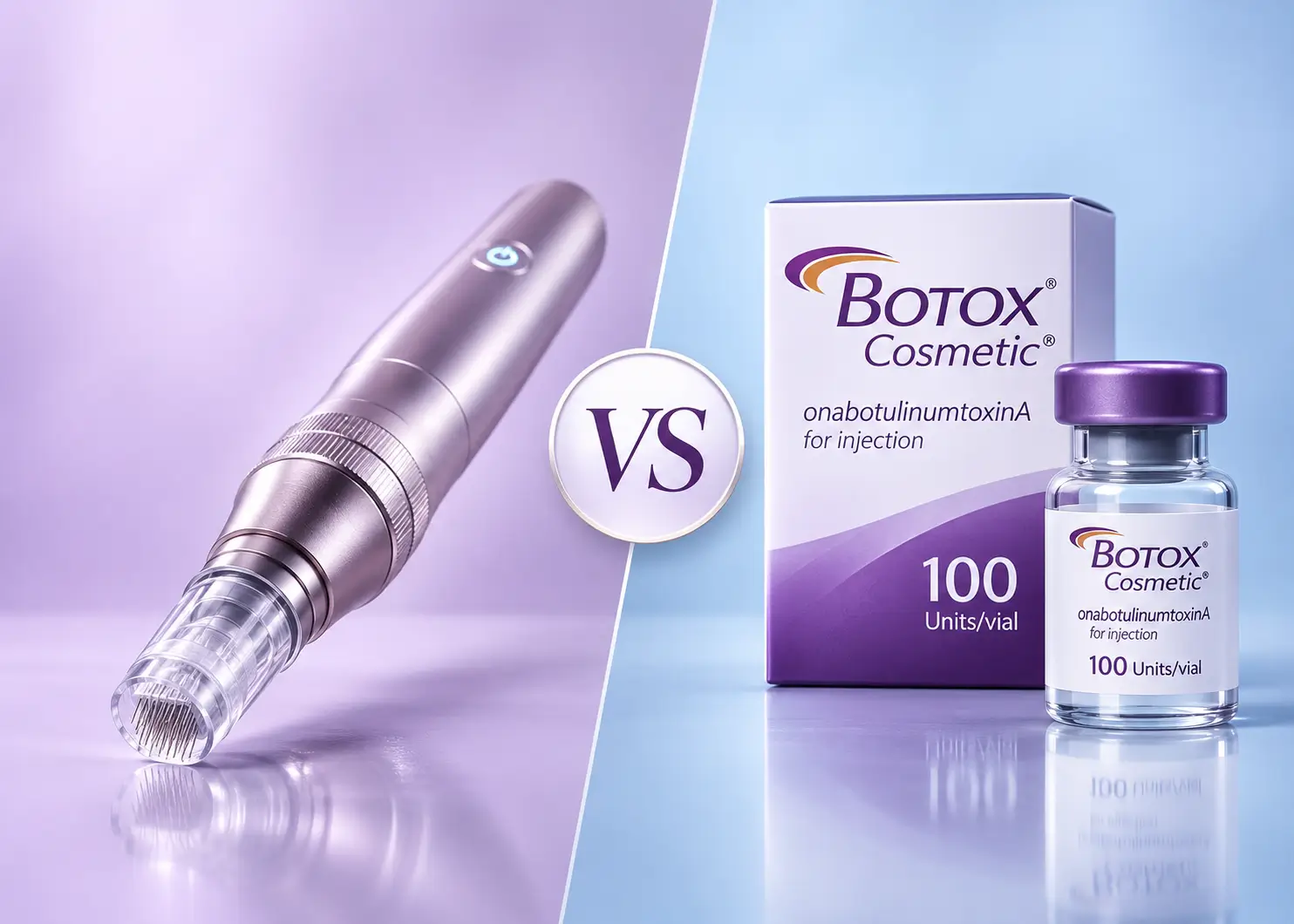
Botox reduces the muscle activity behind expression lines. Microneedling works within the skin to improve texture, selected wrinkles, and scars. The first step is finding out what needs to change.
Microneedling vs Botox at a Glance
|
|
Standard microneedling |
Botox |
|
Best for |
Rough texture, fine lines, depressed acne scars |
Forehead lines, frown lines, crow’s feet |
|
How it works |
Triggers collagen production and skin repair |
Reduces muscle activity that creases skin |
|
First visible changes |
Within a few weeks |
Within 1 to 2 days |
|
Fuller results |
Develop over several months |
Up to 30 days for upper-face lines |
|
Initial treatment course |
Studied wrinkle protocol: 4 sessions, 1 month apart |
1 treatment, followed by assessment |
|
Maintenance |
An annual session may be recommended |
Usually every 3 to 4 months |
|
Downtime |
Redness or sensitivity for a few days to 1 week |
Usually minimal, with possible bruising |
What Is Microneedling?
Microneedling uses fine needles to make controlled punctures in the skin. These small injuries, often called micro-injuries, start a natural repair response that can build collagen and remodel tissue.
Fine lines may soften and selected depressed scars may become less noticeable. Unlike a chemical peel, standard microneedling uses mechanical punctures rather than an acid solution.
What Is Botox?
Botox is a brand of onabotulinumtoxinA, a botulinum toxin type A medicine. It temporarily reduces contraction in treated muscles, so the skin above them creases less.
BOTOX Cosmetic treats forehead lines, frown lines, crow’s feet, and platysma bands. At Activa Derma, we stock Botox in 50-unit and 100-unit vials, so you can match the vial size to the planned treatment dose and help limit unused product.
Microneedling vs Botox: How They Work Differently
Microneedling changes the skin’s repair response. Botox changes the signals that make muscles contract.
Microneedling prompts tissue remodeling, but the underlying muscle keeps moving. Botox blocks the release of acetylcholine, a chemical messenger involved in muscle contraction. Less pull means less folding of the overlying skin.
Needling a frown line does not stop frowning. Treating the muscles between the brows does not remodel cheek scars. The best choice follows the cause.
Microneedling vs Botox for Wrinkles
Botox is generally the better choice for wrinkles that deepen during expression. Microneedling is more relevant when fine wrinkles appear alongside rough or uneven skin.
In a facial-wrinkle study with 32 completers, patients received four monthly microneedling treatments. At 90 days after the final session, 68.8% reported some improvement in appearance.
Microneedling vs Botox by Treatment Concern
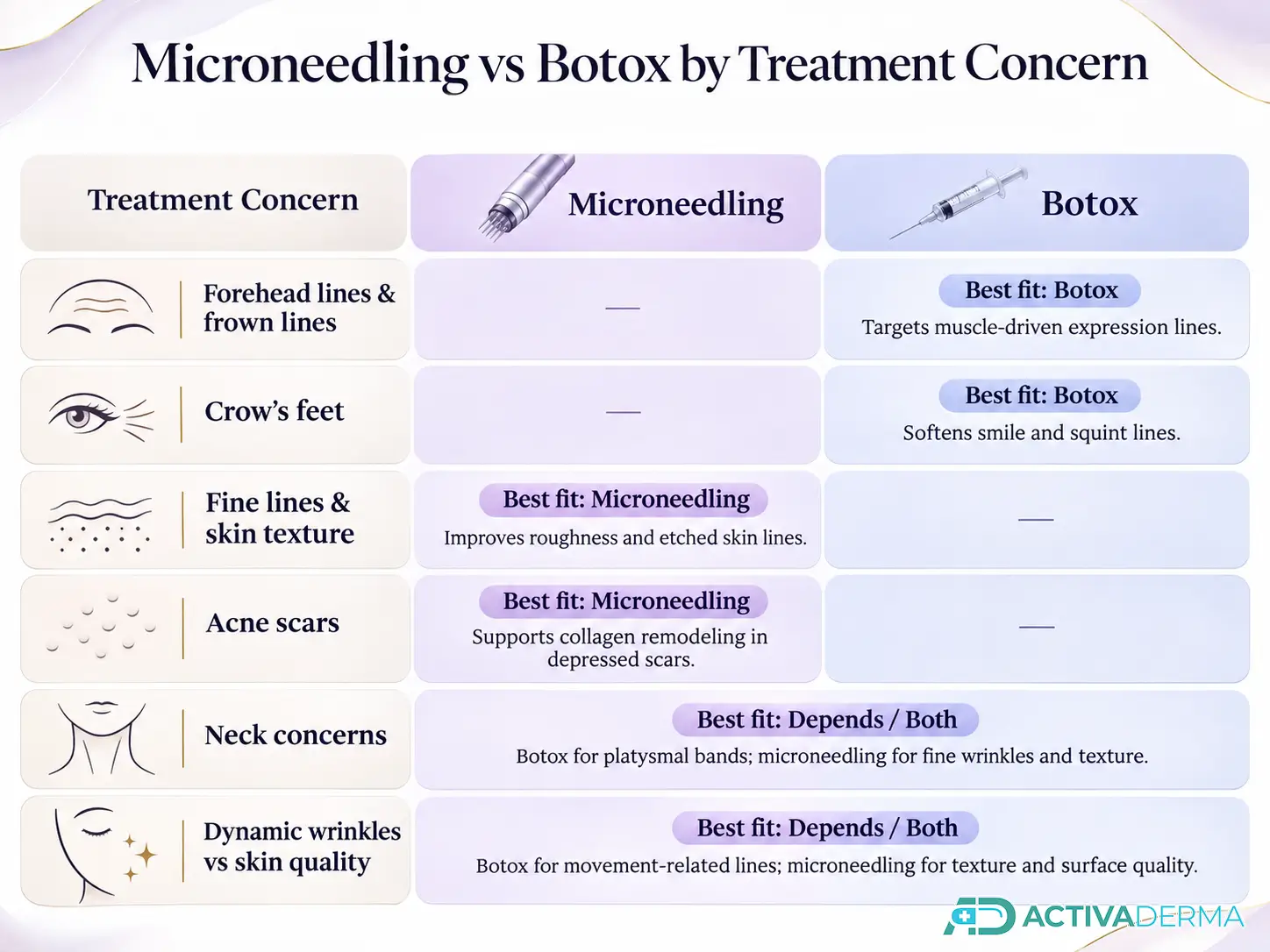
Within one area, muscle-driven lines and skin damage can coexist.
Forehead Lines and Frown Lines
Botox is usually the more direct option because these lines deepen when forehead and brow muscles contract.
Ask patients to raise their brows and frown, then relax. Note whether they use their forehead to help hold their brows up.
Microneedling may address remaining fine skin lines, but it does not reduce muscle pull.
Crow's Feet
Botox targets lines that fan out beside the eyes during smiling or squinting. Fine, crepey texture that remains when the patient relaxes is a separate concern.
Microneedling may address that skin component where device instructions allow treatment.
Assess the outer-eye lines and surrounding texture separately.
Fine Lines and Skin Texture
Microneedling is the stronger fit for roughness and fine etched lines. Its goal is gradual skin remodeling, not reduced expression.
Use the same lighting and camera angle for baseline and follow-up photographs. Otherwise, a change in shadows can look like a treatment result.
Acne Scars
Microneedling is the relevant option here. Specific FDA-authorized devices treat facial acne scars. In a small randomized trial with 15 completers, patients reported an average 41% improvement in scar appearance after three treatments.
Assess scar shape first. A broad, shallow depression needs a different plan from a deep, narrow ice-pick scar.
Neck Concerns
Botox suits visible vertical bands caused by platysma contraction. Microneedling is more relevant to fine skin wrinkles and texture.
For example, SkinPen’s clearance includes neck wrinkles in Fitzpatrick skin types II to IV. Horizontal neck creases, vertical muscle bands, and loose skin are different findings. Ask the patient to point out the one they want treated.
Dynamic Wrinkles vs Skin Quality
Dynamic wrinkles become more obvious when muscles move. Skin-quality concerns, such as rough texture or acne scars, remain visible without expression.
During consultation, photograph the face at rest, with raised brows, at maximum frown, and while smiling.
Then examine the relaxed skin. Roughness surrounding an expression line may need skin treatment as well. A line visible at rest can still respond to Botox if repeated muscle pull helps maintain it.
Microneedling vs Botox: Results and Onset
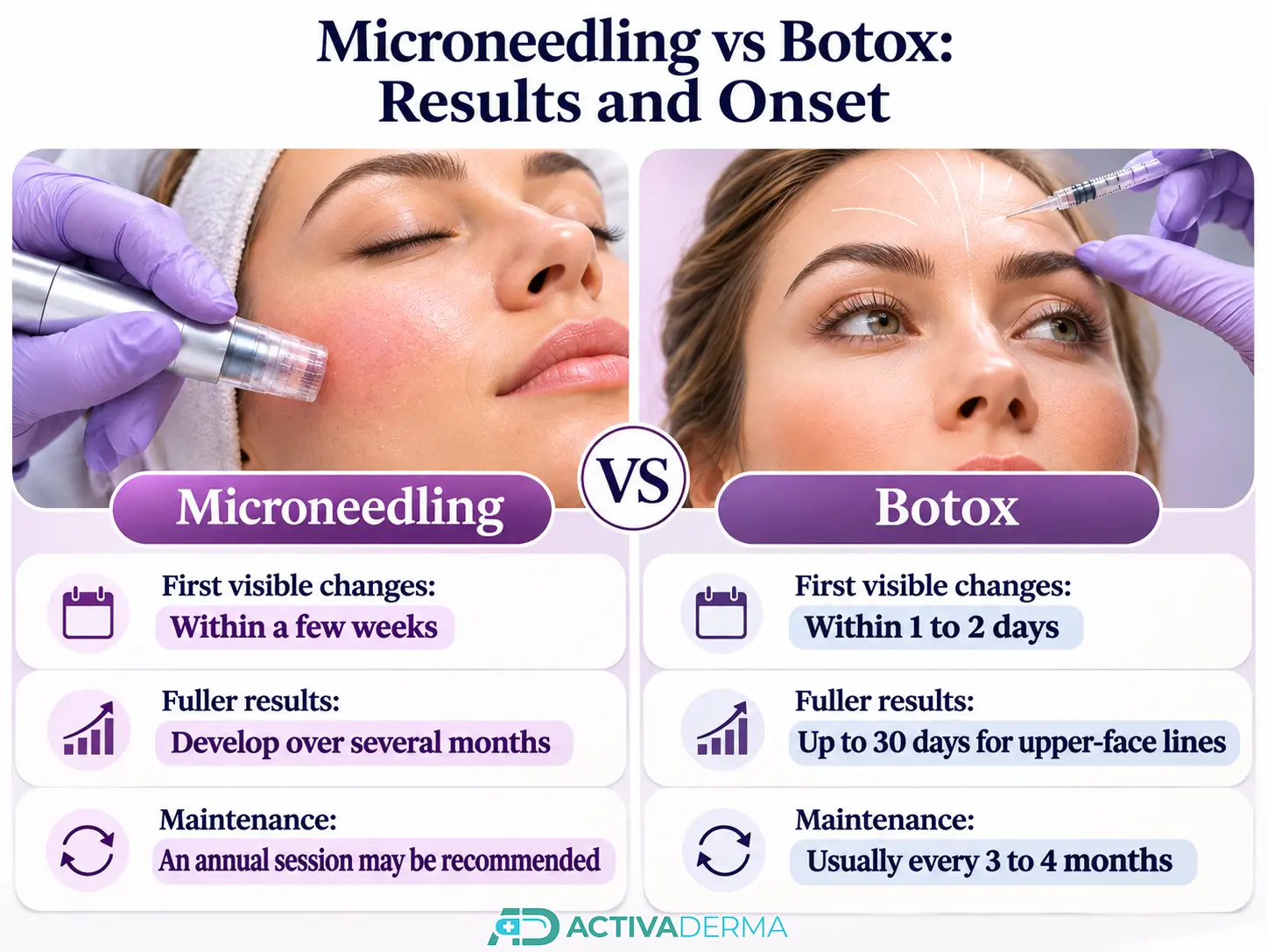
Botox usually produces visible wrinkle changes sooner. The manufacturer reports initial upper-face results in 1 to 2 days, with full results in 30 days. Early improvement and the final assessment are different points in the treatment timeline.
Microneedling improvement may appear within weeks, while fuller results take months. Immediate redness or swelling is not evidence of collagen growth. Explain the full treatment course before booking session one.
Which Lasts Longer: Microneedling or Botox?
Microneedling improvements can persist beyond a Botox cycle, but there is no single duration for every concern. Botox’s frown-line effect lasts about 3 to 4 months.
For microneedling, the device, concern, treatment course, and patient biology affect durability. Skin aging continues afterward. The American Academy of Dermatology notes that annual maintenance may be recommended, rather than assigning every result a fixed lifespan.
Microneedling vs Botox: Patient Selection
When Botox May Be More Appropriate
- Forehead or frown lines deepen clearly during expression.
- Crow’s feet become prominent with smiling or squinting.
- Vertical neck bands become more visible during platysma contraction.
- Fine wrinkles occur alongside rough or uneven texture.
- Depressed acne scars remain after active acne is controlled.
- The patient accepts a series of appointments and gradual improvement.
When Microneedling May Be More Appropriate
Patients Requiring Additional Assessment
Active infection, inflamed acne, poor wound healing, or a keloid history requires closer assessment before microneedling.
For Botox, review neuromuscular conditions and medicines that may affect its action. Pregnancy, breastfeeding, previous procedures, and unexpected reactions to earlier treatments also belong in the history before either procedure is booked.
Can Microneedling and Botox Be Used Together?
Yes. A patient might receive Botox for frown lines and a microneedling course for cheek scars. Give each procedure its own goal and follow-up assessment.
An aesthetic combination-treatment consensus supports spacing consecutive procedures 1 to 2 weeks apart for recovery and assessment. This is not a microneedling-specific timing rule. Confirm skin recovery and device instructions before proceeding.
Standard Microneedling vs RF Microneedling
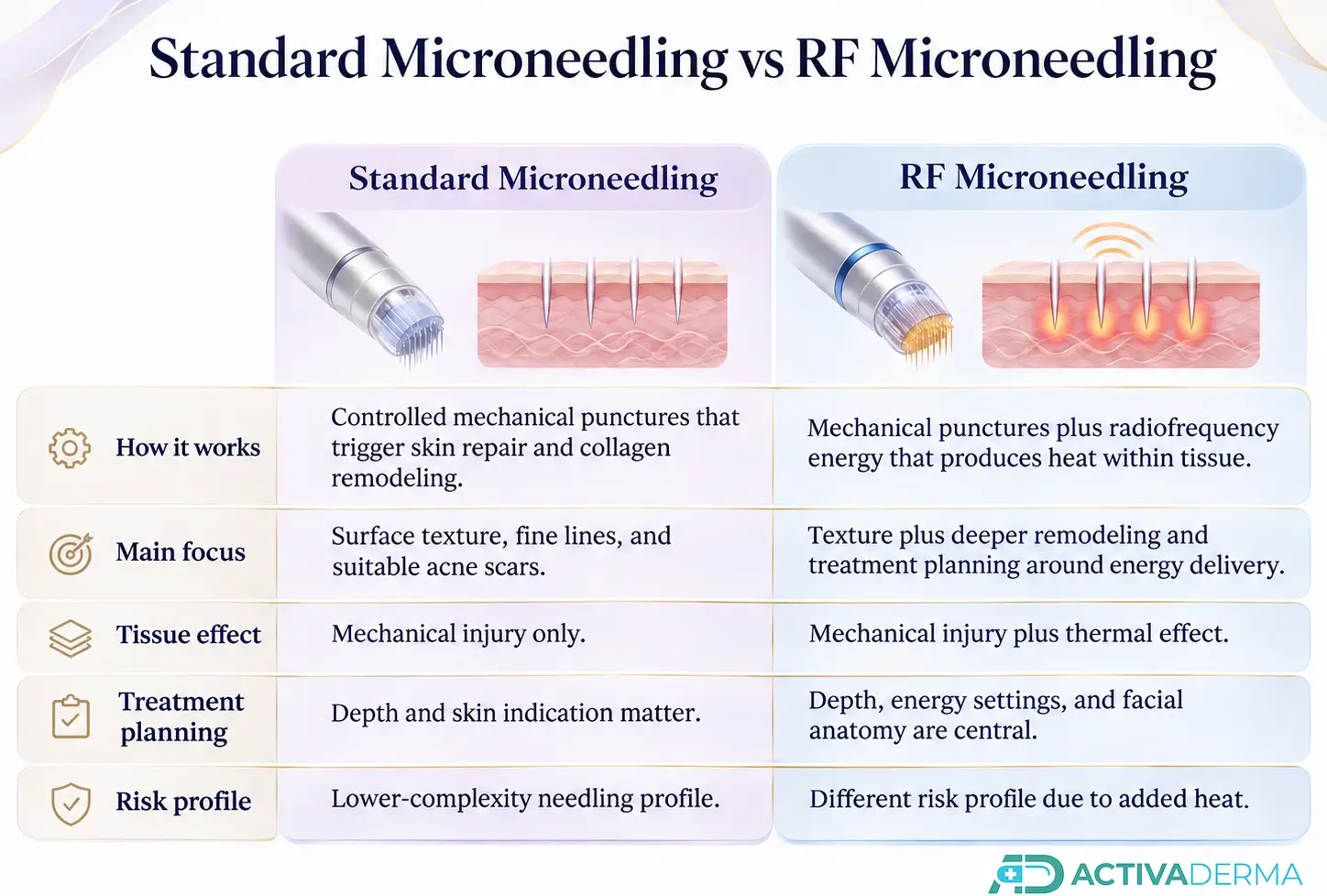
Standard microneedling creates mechanical punctures. RF microneedling also delivers radiofrequency energy, producing heat within tissue. That changes both treatment planning and the risk profile.
Depth, energy settings, and facial anatomy become central to RF treatment. But the FDA’s RF safety communication describes reports including burns, scarring, fat loss, and nerve damage. Do not transfer claims about standard needling to an RF device, or vice versa.
Microneedling vs Botox: Safety and Side Effects
Microneedling Side Effects
- Temporary redness, tenderness, swelling, or dryness can follow treatment.
- Pinpoint bleeding or light peeling may occur.
- Less common problems include infection, pigment changes, and scarring.
Use a new sterile cartridge for each session. Give written aftercare instructions. The AAD advises waiting 24 hours before applying makeup.
Botox Side Effects
- Injection-site discomfort, bruising, or swelling may occur.
- Headache and temporary eyelid or brow drooping are recognized effects.
- Trouble swallowing, speaking, or breathing needs immediate medical attention.
Review baseline facial asymmetry so an existing difference is not mistaken for a new treatment effect.
Microneedling vs Botox: Cost
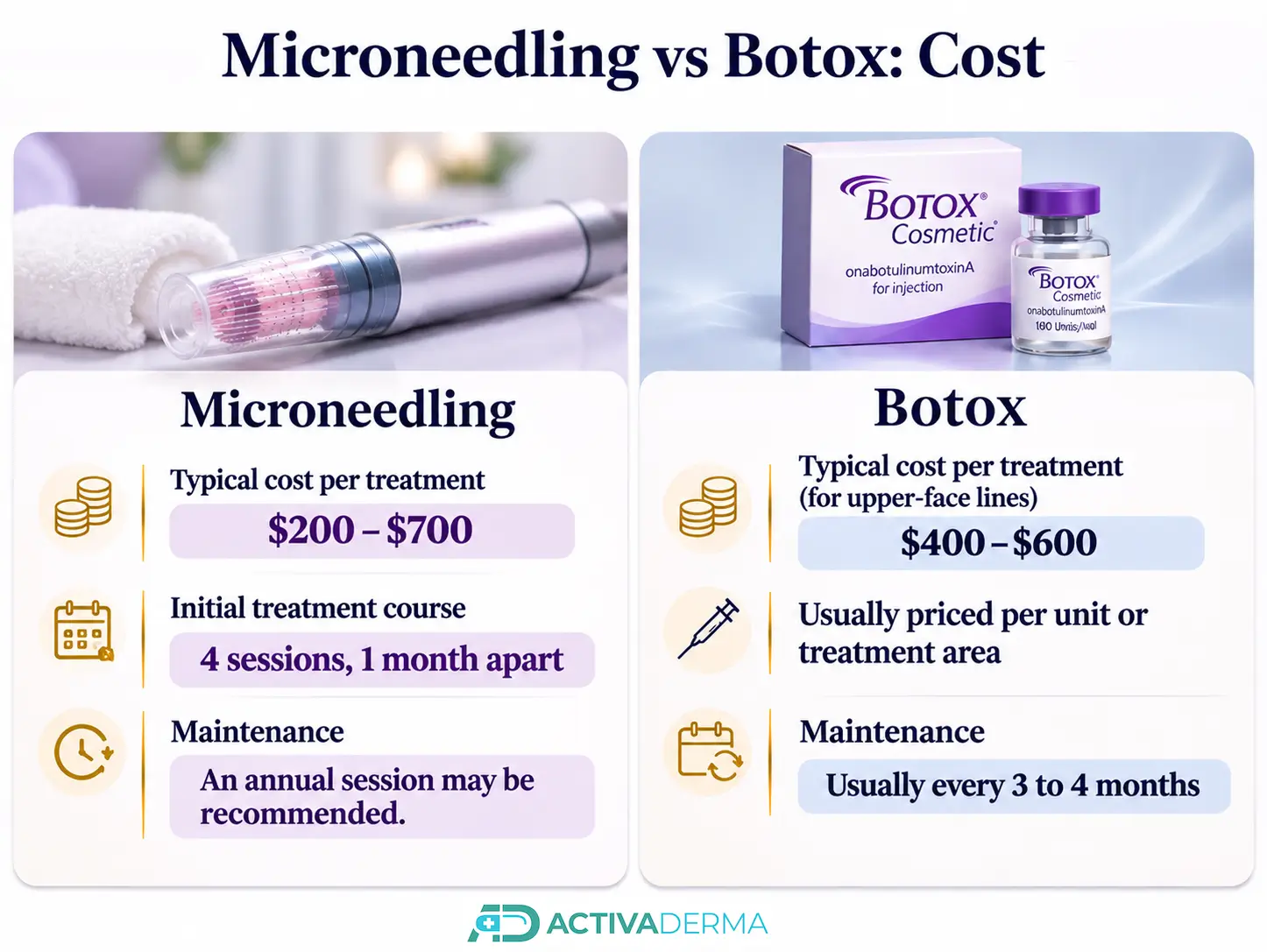
Per-visit fees can overlap. Published standard microneedling prices include $410 at Baylor Medicine and $470 for the full face at University of Utah Health. Botox’s manufacturer gives an upper-face treatment estimate of $400 to $600.
A microneedling series can cost more initially because it involves several sessions. RF adds different equipment costs. Botox fees depend on units or areas treated, with repeat visits needed to maintain the effect.
Microneedling vs Botox From the Practice Perspective
Microneedling requires equipment, disposable cartridges, and skin-preparation time. Botox requires product purchasing, reconstitution, and careful vial utilization. Compare actual room time, staff time, and consumables against revenue per appointment.
A three-session course occupies three slots before maintenance. At Activa Derma, we supply Botox in different vial sizes. Match purchasing to planned treatments and follow single-dose vial instructions when calculating waste.
How Practitioners Should Choose Between Microneedling and Botox
|
|
What to assess |
Treatment direction |
|
Primary concern |
Does smiling or frowning deepen the line? |
Botox for the muscular component |
|
Skin assessment |
Fine wrinkles, roughness, or depressed scars? |
Consider microneedling and scar-specific planning |
|
Anatomy |
Brow support, eyelid position, scar shape, skin thickness |
Adjust the plan to the findings |
|
Desired outcome |
Less creasing, smoother texture, or both? |
One treatment or a staged combination |
|
Evidence |
Exact product, device, indication, and studied course |
Use the matching label and clinical data |
Conclusion
Choose Botox for expression-driven forehead lines, frown lines, crow’s feet, or platysma bands. Consider microneedling for fine skin wrinkles, uneven texture, and suitable acne scars. When both are present, give each a separate treatment goal.
FAQ
Should I get microneedling or Botox first?
Start with the main concern. Expression lines favor Botox, while scars or texture favor microneedling. Plan recovery between procedures.
Can I get Botox 2 days after microneedling?
Do not assume 48 hours is enough. The injector must assess healing, including redness, tenderness, and any broken skin.
What's better for wrinkles, microneedling or Botox?
Botox is generally better for movement-driven lines. Microneedling is more relevant to fine skin wrinkles and rough texture.
Can you microneedle on top of Botox?
Previously treated areas may receive microneedling later. Fresh injections need a clinician-approved sequence that follows device instructions.
What hurts more, Botox or microneedling?
Botox has brief injection pinches. Microneedling creates repeated prickling across a larger area, usually with topical numbing. Neither is always more painful.
Will microneedling get rid of deep wrinkles?
Complete removal is unlikely. It may soften wrinkles, but deep folds can also involve muscle pull, volume loss, or skin laxity that needs another approach.
How far apart can I do microneedling and Botox?
A 1-to-2-week review window can help assess recovery, but the actual timing depends on healing, treatment intensity, and device instructions.
Does microneedling work like Botox?
No. Microneedling triggers skin repair and collagen remodeling. Botox reduces targeted muscle contraction. Needling does not stop expression muscles from moving.