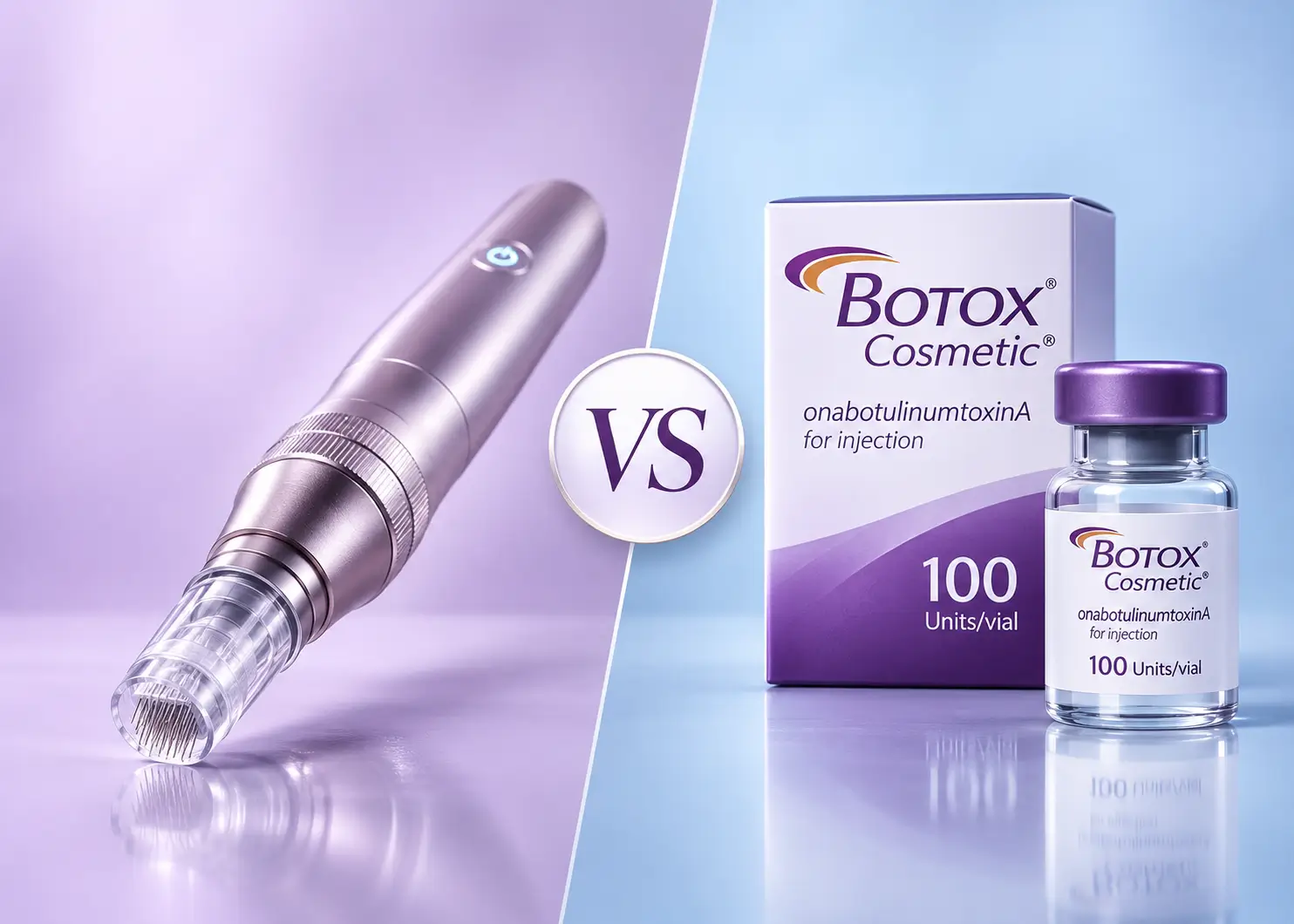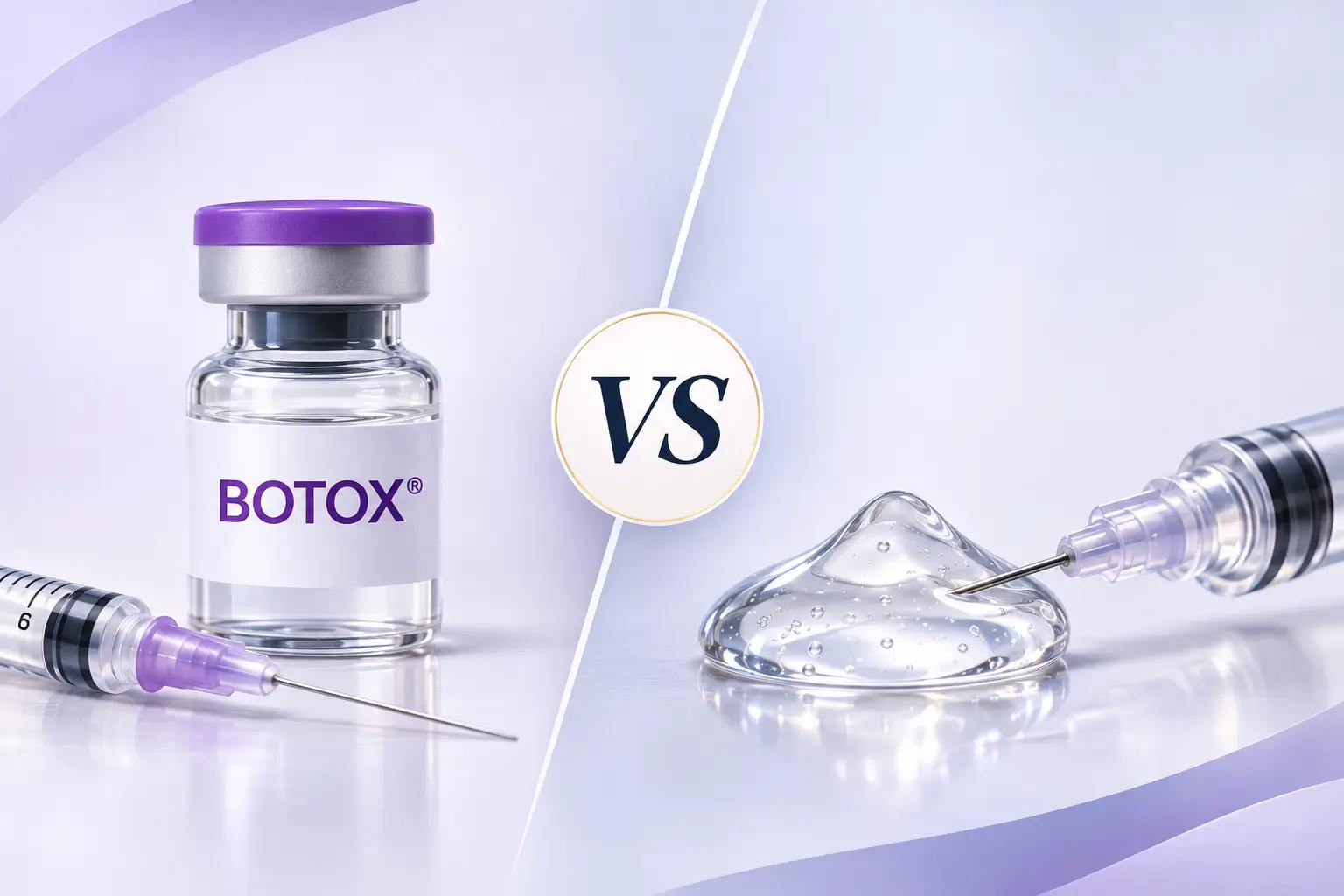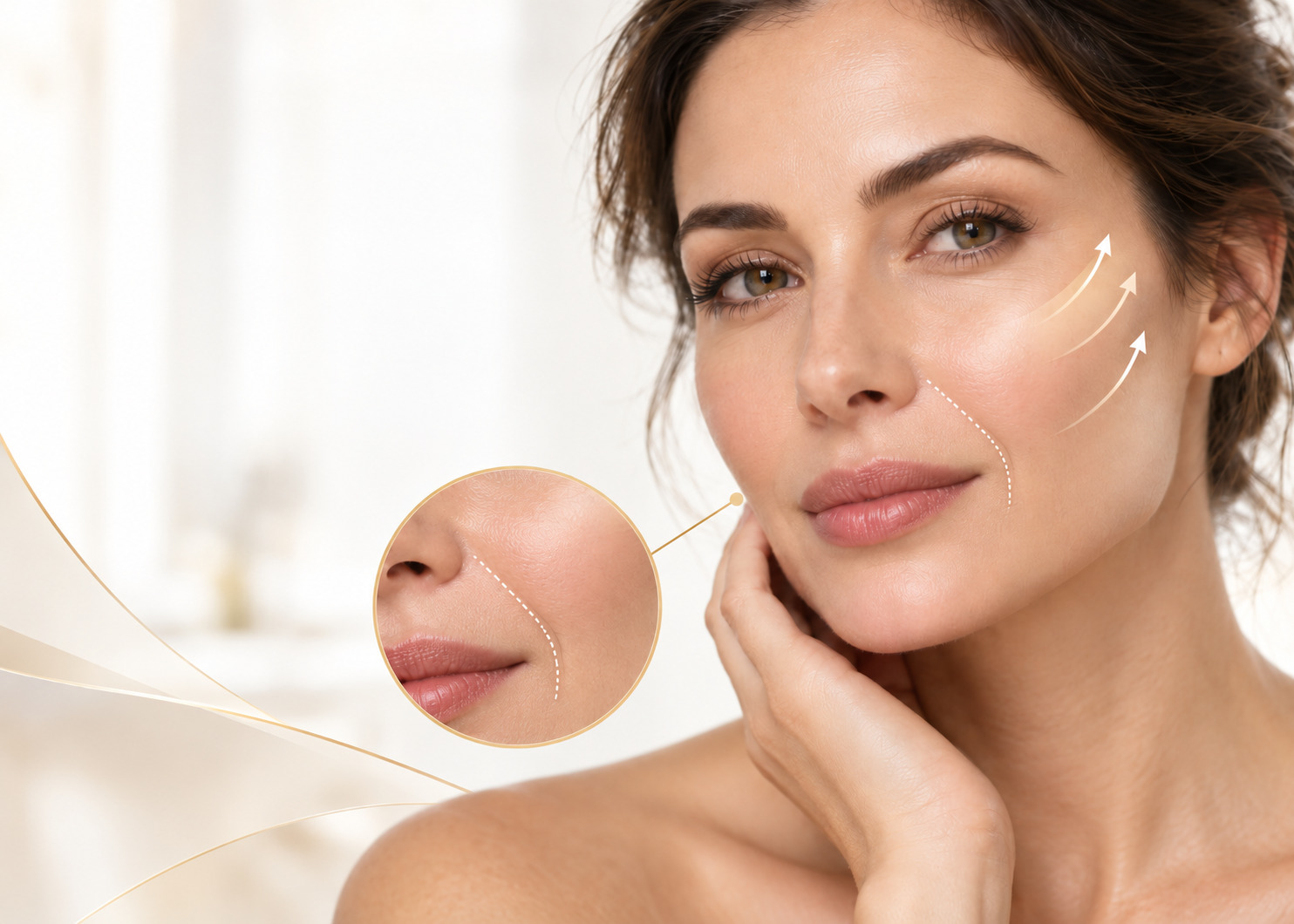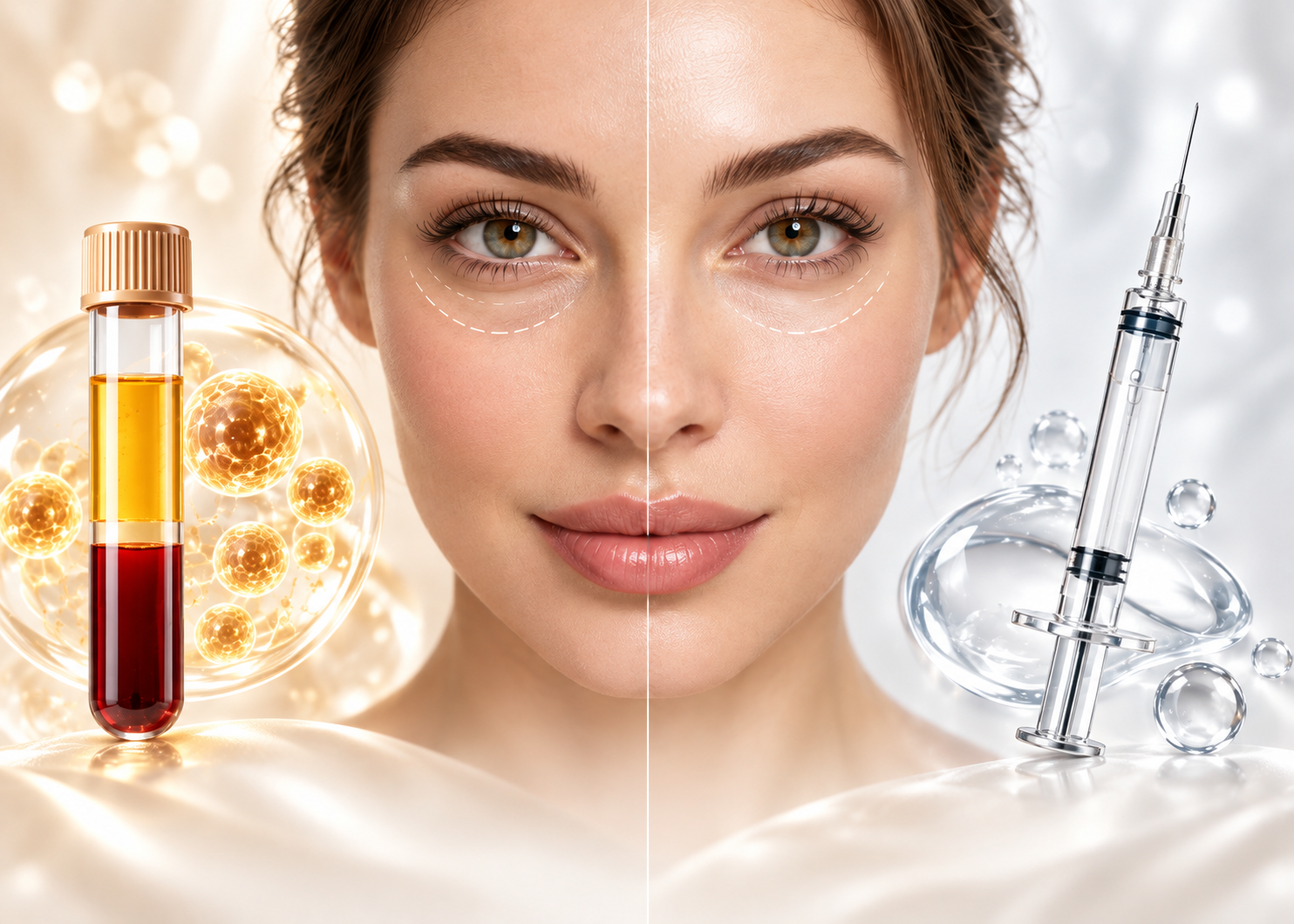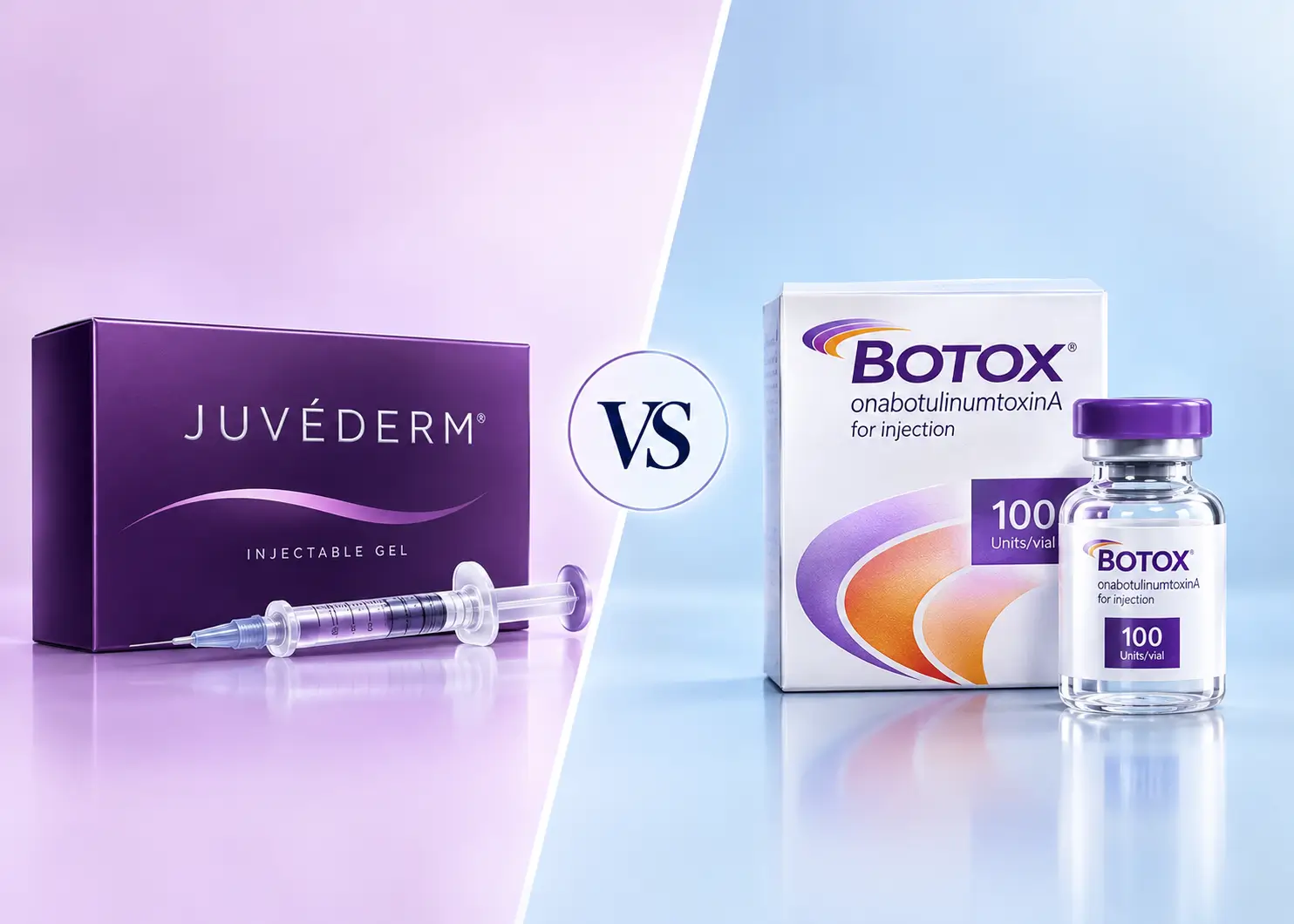

JUVÉDERM and Botox improve facial appearance in different ways. JUVÉDERM fillers add volume to soften folds, enhance lips, or improve contours. Botox reduces muscle activity to soften expression lines. For clinicians, choosing between them starts with a specific question: does this area need added support, less muscle contraction, or both?
JUVÉDERM vs Botox at a Glance
|
|
JUVÉDERM |
Botox |
|
Product type |
Collection of dermal fillers |
Prescription neuromodulator |
|
Active material |
Cross-linked hyaluronic acid (HA) |
OnabotulinumtoxinA |
|
Mechanism |
Adds tissue volume and support |
Temporarily reduces muscle contraction |
|
Primary goal |
Fullness, fold correction, contour |
Softer muscle-driven lines |
|
Dynamic wrinkles |
Does not reduce the muscle pull |
Main cosmetic role |
|
Static lines and folds |
Corrects selected folds or volume deficits |
May soften muscle-related creases |
|
Volume restoration |
Yes |
No direct replacement |
|
Facial contouring |
Adds projection or definition |
Changes selected muscle activity |
|
Visible results |
Immediate, with early swelling |
May begin in 1 to 2 days |
|
Longevity |
Around 12 to 24 months, depending on use |
Commonly 3 to 4 months |
|
Reversibility |
HA may be reduced with hyaluronidase |
Cannot be dissolved |
|
Pricing |
Usually per syringe |
Usually per unit or area |
|
Safety considerations |
Swelling, nodules, vascular complications |
Bruising, headache, unwanted muscle weakness |
|
Practitioner priority |
Match gel to tissue needs |
Preserve muscle balance |
What Is the Difference Between JUVÉDERM and Botox?
Botox contains onabotulinumtoxinA, a botulinum toxin type A that temporarily reduces nerve signaling to treated muscles. Less contraction means less folding of the overlying skin. It does not replace lost facial fullness.
JUVÉDERM is a collection of hyaluronic acid gels that soften folds, enhance lips, or provide structural support. Each formulation has its own treatment areas and evidence.
They are not direct substitutes. Longer-lasting filler cannot replace muscle relaxation, and Botox cannot build cheek or chin projection.
What Does Botox Treat?
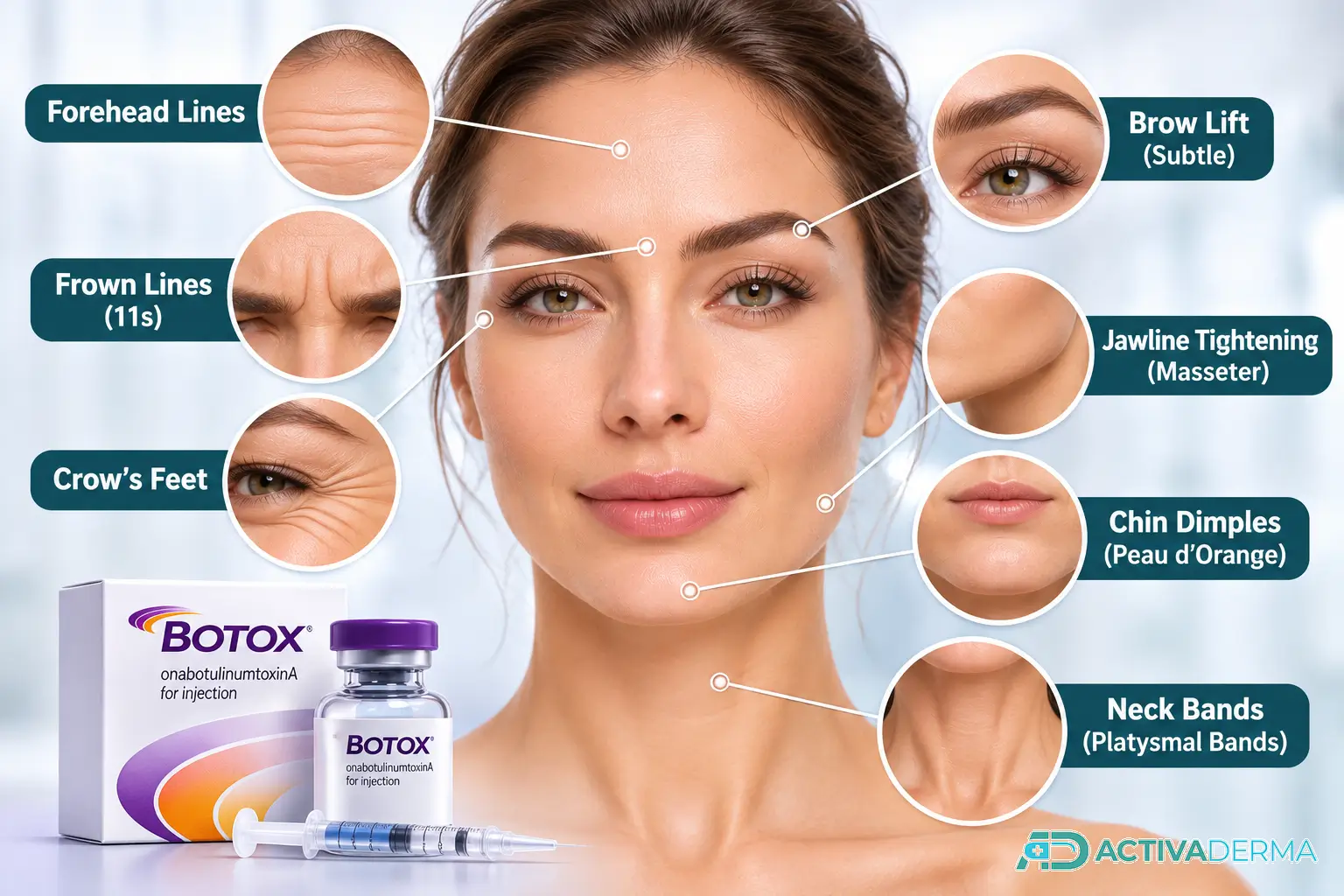
Botox softens forehead lines, frown lines between the brows, and crow’s feet around the eyes. These lines deepen as patients raise their eyebrows, frown, smile, or squint. By reducing the muscle activity behind them, Botox helps the overlying skin look smoother.
BOTOX Cosmetic also treats visible vertical neck bands caused by the platysma muscle contracting. Watching the patient at rest and during movement helps distinguish muscle-driven concerns from loose skin or missing volume.
At Activa Derma, we supply Botox in 50-unit and 100-unit vials for clinical use.
What Does JUVÉDERM Treat?
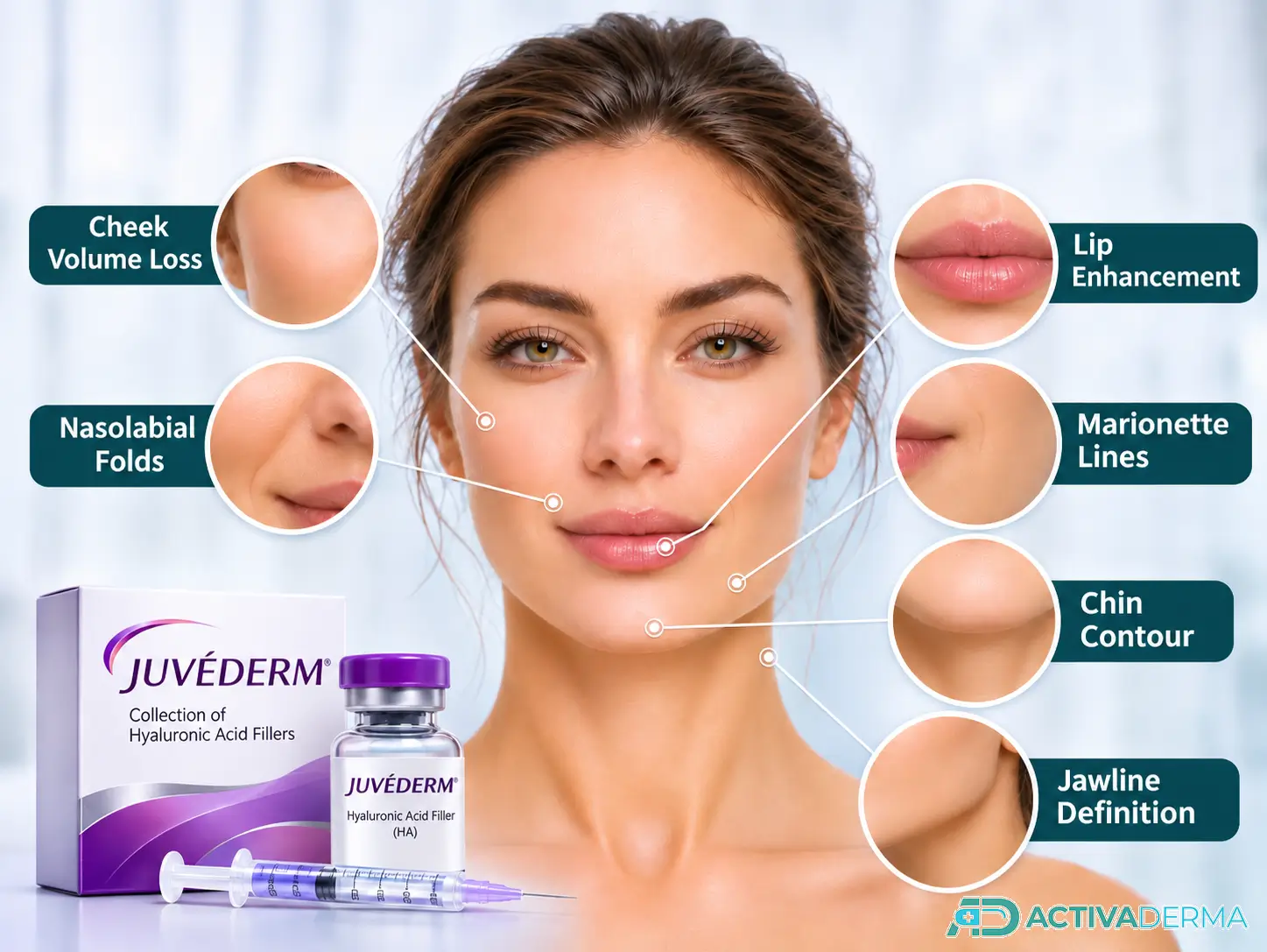
JUVÉDERM treats selected folds, volume loss, and contour concerns through different HA formulations. By adding volume beneath the skin, it can restore fullness to hollow cheeks or give lips more shape. Around the nose and mouth, it can soften deeper folds by filling the local depression.
The choice of gel depends on the treatment area. Cheek projection needs different support from a small correction in the lips, where flexibility is important during speech and smiling.
At Activa Derma, we stock JUVÉDERM fillers in different formulations and pack sizes to suit these treatment goals.
JUVÉDERM vs Botox by Treatment Area
Match the location to the cause. One facial area can have both movement-related lines and missing volume.
Forehead and Frown Lines
Botox is usually the better choice because brow movement repeatedly folds the skin. Assess the forehead and frown muscles together, especially when the patient uses the forehead to help hold the brows up. Even a line visible at rest may soften when muscle pull decreases. Adding JUVÉDERM does not stop that repeated folding.
Crow's Feet
Botox targets the contraction that creates lines beside the eyes during smiling or squinting. The labeled BOTOX Cosmetic treatment uses 24 units across both sides, with 12 per side. The goal is softer lateral lines during expression. JUVÉDERM under-eye treatment addresses a hollow, which is a different concern from crow’s feet.
Nasolabial Folds
JUVÉDERM fits folds caused by local depth or lost support. VOLLURE XC and ULTRA PLUS XC provide options here. In the manufacturer’s VOLLURE XC study, 96% of patients reported improvement at six months. Botox does not replace that support. The choice of JUVÉDERM filler for nasolabial folds depends on the depth of the crease and how much support the surrounding tissue needs.
Lips
Choose JUVÉDERM when the goal is fuller lips, a more defined border, or correction of mild asymmetry. ULTRA XC and VOLBELLA XC have lip augmentation uses. A Botox lip flip is an off-label muscle treatment that exposes slightly more upper-lip tissue without adding volume. Ask whether the patient wants more visible lip or genuinely more fullness.
Cheeks and Midface
JUVÉDERM fits hollow or flattened cheeks. VOLUMA XC restores fullness and improves projection by adding volume beneath the skin. Botox cannot create this structural change. Compare front and oblique photographs when assessing correction, so improved forward projection does not become unwanted width. The goal is fuller cheek contours, not a facelift-like pull.
Chin and Jawline
JUVÉDERM suits added chin projection or sharper jawline definition. VOLUMA XC has a chin indication, while VOLUX XC is designed for jawline definition. Botox can address selected muscle-driven concerns, such as chin dimpling or enlarged chewing muscles, through off-label use. Reducing muscle bulk and adding structural support change facial shape in different ways.
Under-Eye Area
VOLBELLA XC improves the appearance of under-eye hollows by adding volume. Its under-eye results can last up to one year with optimal treatment. Botox is more relevant to dynamic lines beside the eyes. Check whether the shadow comes from a hollow, pigment, or a protruding fat pad, since those findings need different plans.
Dynamic Wrinkles vs Volume Loss
Botox fits wrinkles that deepen during expression. JUVÉDERM fits missing fullness or projection that remains apparent when the face is relaxed.
Compare rest and expression photographs. A fixed wrinkle can involve muscle pull, sun damage, and reduced skin support. It does not automatically need filler. Some patients have both muscular and volume-related changes.
JUVÉDERM vs Botox: Results and Onset
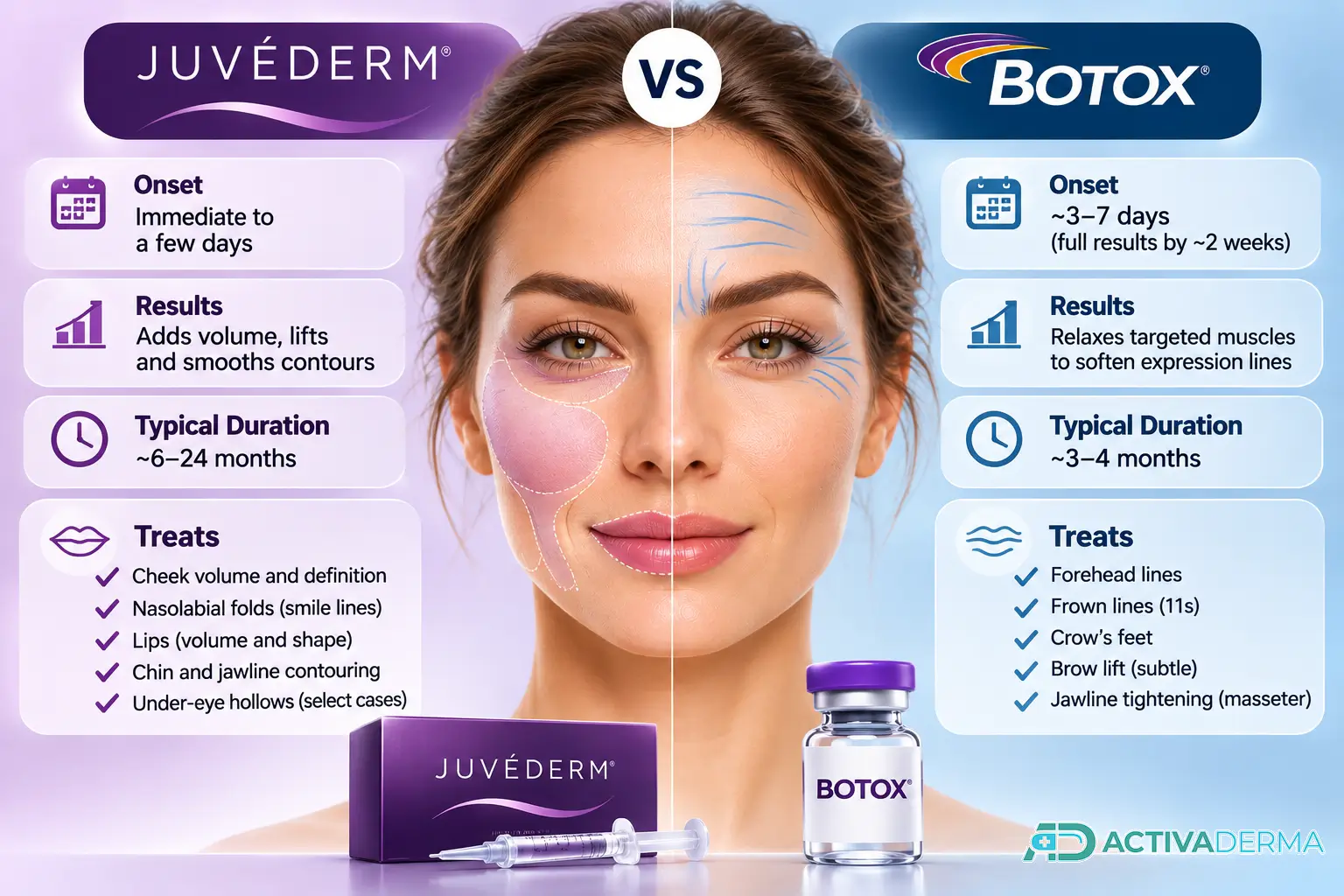
JUVÉDERM changes volume immediately. Botox develops gradually, with initial effects possible in 1 to 2 days. The manufacturer describes full upper-face results at 30 days and platysma-band results at 14 days. Initial movement reduction is not the final response.
JUVÉDERM swelling can make the first result look fuller or less even than it will later. Review after early reactions settle, often around two weeks, although some areas take longer.
Which Lasts Longer: JUVÉDERM or Botox?
JUVÉDERM generally lasts longer. Botox’s wrinkle-reducing effects commonly last 3 to 4 months. JUVÉDERM duration depends on the exact gel and area:
- VOLUMA XC cheeks: up to 24 months.
- VOLLURE XC folds: up to 18 months.
- ULTRA XC or VOLBELLA XC lips: up to 12 months.
- VOLUX XC jawline: up to 12 months.
JUVÉDERM vs Botox: Patient Selection
Choose the right treatment by reviewing the desired change, medical history, and previous injections.
When Botox May Be More Appropriate
- Forehead, frown, or crow’s-feet lines deepen during expression.
- Platysma contraction creates visible neck bands.
- The patient wants softer movement-related lines without added fullness.
- Cheeks have lost fullness or projection.
- Lips need added volume or definition.
- Local folds or chin and jawline contours need structural correction.
When JUVÉDERM May Be More Appropriate
When Both May Be Considered
Both fit when the patient has separate muscular and volume-related concerns, such as strong frown lines and flatter cheeks. Give each treatment a clear goal. Not every aging face needs both.
Can JUVÉDERM and Botox Be Used Together?
Yes. Botox may soften crow’s feet while JUVÉDERM restores cheek fullness, with treatment during one appointment or staged when appropriate.
If movement obscures a crease, treating the muscle first helps reveal what remains before adding filler. Document products, amounts, and sites separately to review each correction.
JUVÉDERM vs Botox: Safety and Side Effects
Explain expected recovery and give patients a direct route to the clinic afterward.
Botox Side Effects
- Bruising, tenderness, or headache can follow treatment.
- Unwanted nearby weakness may cause temporary brow or eyelid drooping. Eyelid ptosis occurred in 3% of patients in the labeled glabellar trials.
- Rare swallowing or breathing problems require urgent medical assessment.
- Swelling, bruising, tenderness, and firmness are common early reactions.
- Lumps, delayed inflammation, or prolonged swelling need clinical review.
- Accidental injection into a blood vessel can cause tissue damage or vision loss. Unexpected severe pain, blanching, or visual symptoms need immediate attention.
JUVÉDERM Side Effects
Can JUVÉDERM or Botox Be Reversed?
JUVÉDERM may be reduced with hyaluronidase. Botox cannot be dissolved, and its effects fade as nerve-to-muscle signaling recovers.
Research shows that response to hyaluronidase varies by product and dose. Repeat treatment may be needed, and allergic reactions are possible.
JUVÉDERM vs Botox: Cost
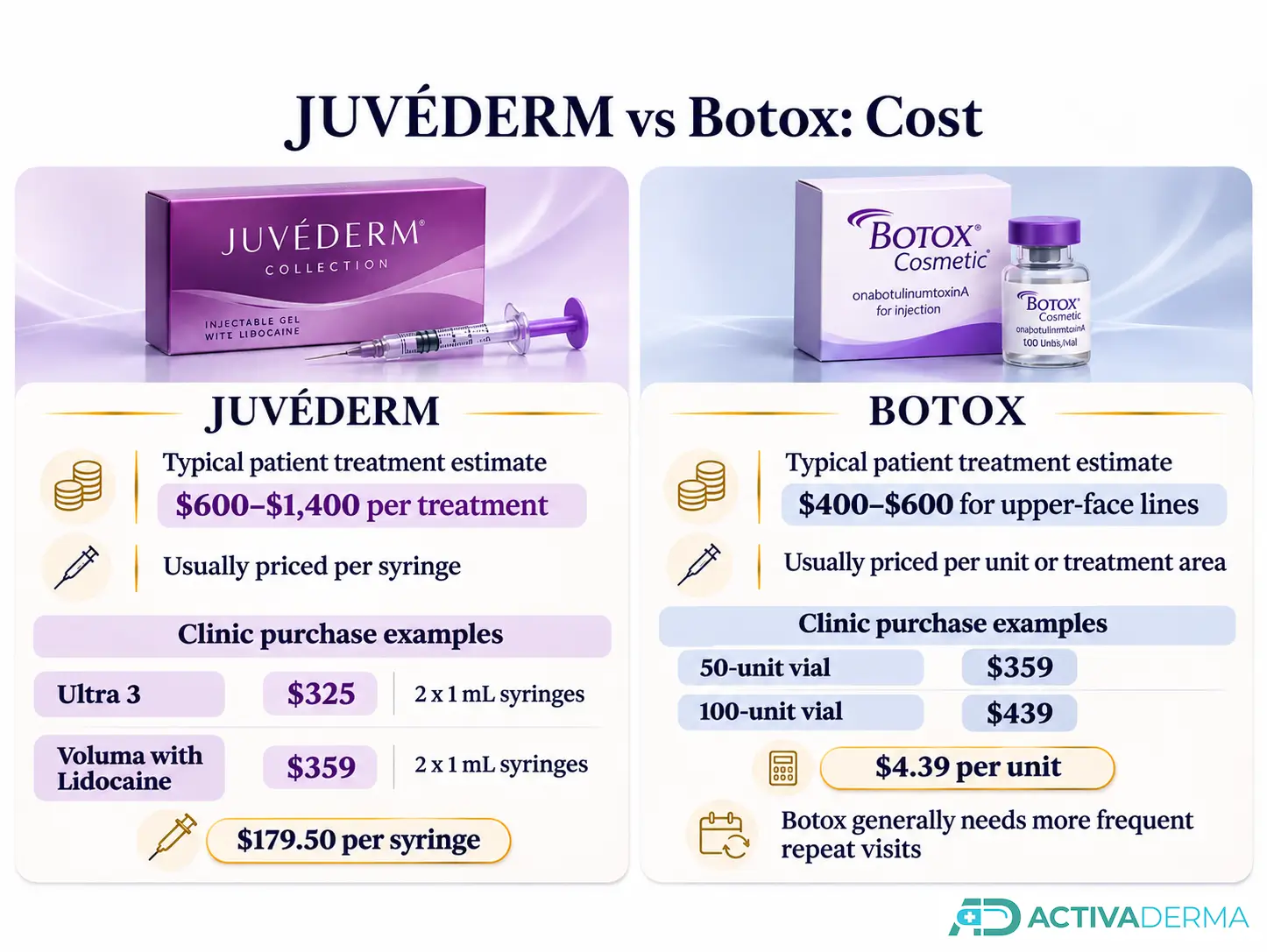
JUVÉDERM generally costs more per appointment. The brand’s published estimate is $600 to $1,400 per treatment, compared with about $400 to $600 for BOTOX Cosmetic treatment for upper-face lines. These are patient treatment estimates, not product purchase prices.
Botox is commonly priced by the unit or treatment area. JUVÉDERM is usually priced by the syringe, with the total depending on the formulation and amount used. For a useful comparison, quote the full planned correction and expected maintenance schedule, since Botox generally needs more frequent repeat visits.
At Activa Derma, our Botox products include a 50-unit vial for $359 and a 100-unit vial for $439. The 100-unit option works out to $4.39 per unit before quantity discounts.
Within our JUVÉDERM range, Ultra 3 costs $325 for two 1 mL syringes. Voluma with Lidocaine costs $359 for two 1 mL syringes, or $179.50 per syringe.
How Practitioners Should Choose Between JUVÉDERM and Botox
|
Decision |
What to establish |
How it guides treatment |
|
Primary concern |
Movement, fold depth, volume loss, or laxity |
Muscle activity favors Botox. Missing volume favors JUVÉDERM. |
|
Anatomy |
Brow support, muscle pull, bone, fat, previous filler |
Preserve function and identify missing support. |
|
Desired aesthetic outcome |
Less contraction, fuller lips, projection |
Agree on the change before selecting products. |
|
Product-specific factors |
Indication, formulation, duration, prior response |
Match evidence and gel behavior to the goal. |
Conclusion
Botox is better for patients who want softer frown lines, forehead lines, or crow’s feet. JUVÉDERM suits goals such as fuller lips, restored cheek volume, or less pronounced nasolabial folds. Patients with both concerns may benefit from a combined plan.
At Activa Derma, we supply Botox and JUVÉDERM fillers, with different vial sizes and filler formulations to match your practice’s treatment needs.
FAQ
Is Juvederm fillers better than Botox?
For volume replacement, lip augmentation, or selected fold correction, yes. Botox is more appropriate when muscle movement drives the concern.
What is the difference in cost between Botox and Juvederm?
JUVÉDERM is usually priced per syringe, while Botox is commonly priced per unit or area. The total depends on the treatment plan.
Should you get Botox or Juvederm first?
Treat the main concern first. When muscle pull obscures a crease, Botox first can clarify whether filler is still needed after the response develops.
Which is healthier Botox or Juvederm filler?
Neither is inherently healthier. The appropriate choice depends on the patient’s medical history, anatomy, and cosmetic goal.
Which lasts longer, JUVÉDERM or Botox?
JUVÉDERM usually lasts longer, with selected results lasting 12 to 24 months. Botox commonly lasts 3 to 4 months.
Can JUVÉDERM and Botox be used together?
Yes. They can address separate concerns within one plan, such as cheek volume loss and frown lines.
Which is safer, Botox or Juvederm?
There is no universal winner. They have different risks, so appropriate selection, anatomy knowledge, and complication readiness guide safe treatment.
Which is better for forehead wrinkles, Botox or Juvederm?
Botox is usually better because it reduces the muscle activity causing forehead creases. JUVÉDERM is not a routine forehead-wrinkle substitute.